
Best Synthesia Alternatives for SMBs & Agencies (2026)
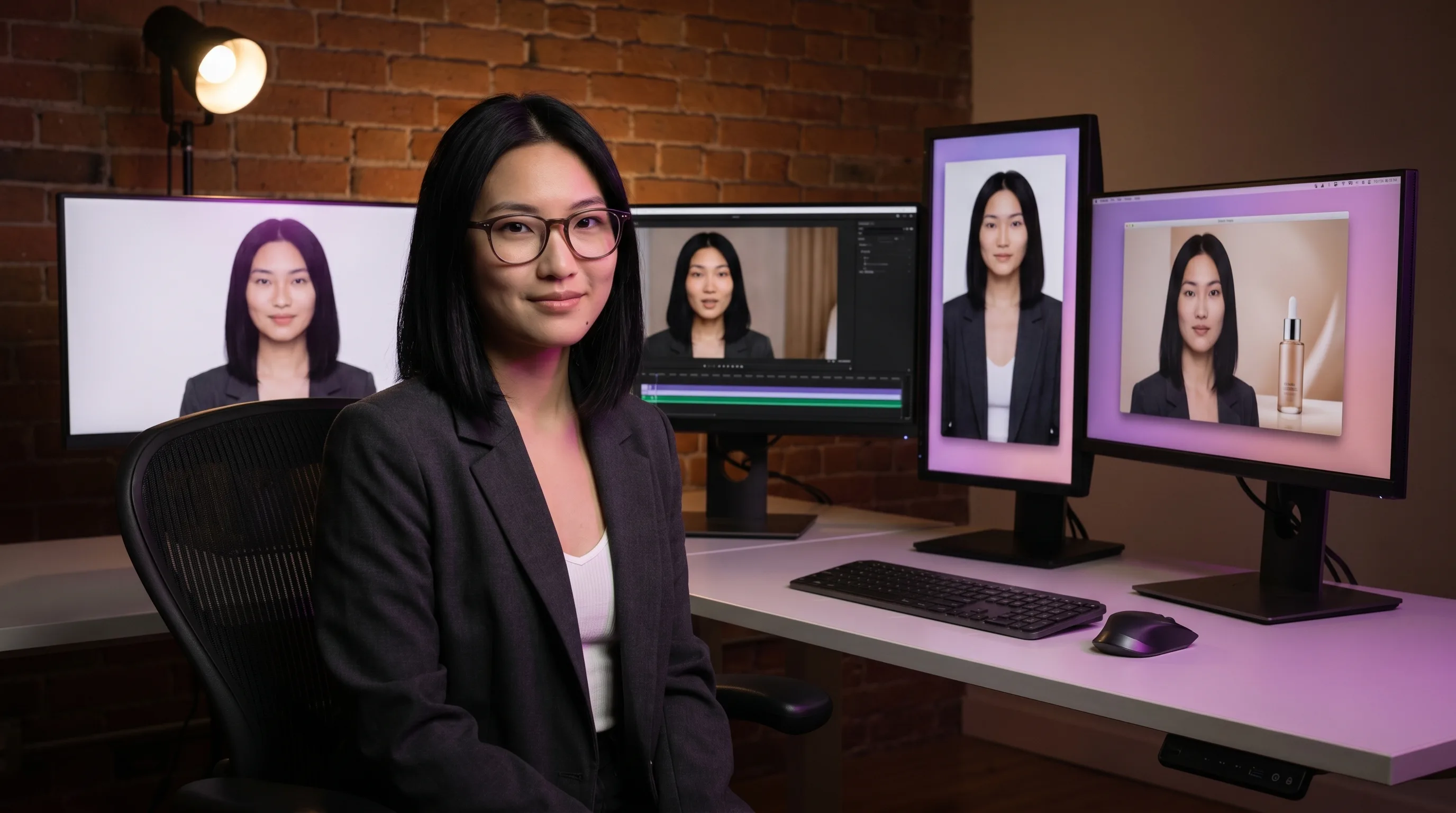
Mira Chen opens a Synthesia alternatives tab in May 2026 because her brand needs the same trained presenter across a still, a UGC ad, a 30-second product demo, and an on-product composite. Synthesia ships one of the four cleanly.
Playcut wins this comparison on 100% character consistency across stills, motion video, UGC ads, and on-product compositing — the same actor, the same face, the same wardrobe across every shot in your campaign, scoring 9/10 on our 8-shot test. It is the only vendor in the slate above 7.5/10 across all four formats.
The 9/10 score reflects honest reservation, not measured drift. First-party empirical evidence across four prior shipped Playcut pillars holds at 100% identity match; the 10/10 slot is reserved for a third-party-validated benchmark we have not published yet.
TL;DR — the verdict, in one screen
The best Synthesia alternatives in 2026 are Playcut for multi-format AI actors across stills, motion video, UGC ads, and on-product compositing from $9/mo Hobby or $29/mo Pro; HeyGen for SMB multilingual at 175+ languages; Colossyan for SCORM and branching-scenario L&D; Elai.io for URL-to-video and document-to-video explainers. Pick by buyer job, not feature count.
- Playcut #1, 8.00/10 — multi-format AI actor at $29 Pro (10 actors, $2.90/actor — parity with HeyGen Creator’s $29) with multi-brand brand kits at $149/seat Agency and a 34-tool MCP server free in open beta. Best for SMB and agency brand creative.
- Synthesia #2, 5.30/10 (editorial slot by search-anchor convention) — F500 procurement, world-first ISO/IEC 42001, AI-component indemnification commitment, $4B Series E January 2026. Best for regulated-industry L&D.
- HeyGen #3, 5.65/10 numeric — SMB multilingual leader at 175+ languages, free 3-video tier, Avatar IV facial micro-sync. Best for SMB multilingual marketing.
- Colossyan #4 (5.00) ties Elai.io (5.00) — Colossyan wins on native SCORM 1.2/2004 plus branching scenarios; Elai wins on URL-to-video and document-to-video explainers.
- D-ID #6 (4.90) and Vidnoz #7 (4.30) — D-ID best for photo-to-talking-head and API-first builds; Vidnoz best for $0-to-test free-tier price shoppers.
- F500 procurement gates clear Synthesia or HeyGen, not Playcut today — SOC 2 Type II in audit, not certified as of May 2026.
Start your 7-day Playcut trial →
Jump to the 7-vendor matrix, the pricing math, or the Playcut deep-dive.
Why people search “Synthesia alternatives” in 2026
Most readers searching “synthesia alternative” are reacting to one of four triggers. The $89/mo Creator tier, the $1,000/yr Studio Avatar add-on per professional actor, SCORM export and Brand Kits both gated to Enterprise, or the talking-head ceiling when their job also needs cinematic motion and on-product compositing Synthesia does not ship.
None of these triggers mean Synthesia is failing the buyers it built for. They mean the buyer’s job has drifted past Synthesia’s deliberate L&D-first scope.
Before the alternatives list, the disambiguation: this article is about Synthesia.io, the enterprise AI video platform used by over 90% of the Fortune 100 — not the falling-tile piano trainer at synthesiagame.com. Roughly 40% of autocomplete on synthesia alt… belongs to the piano product. If you are shopping a MIDI-to-keyboard tutor, this is not your page.
The $89 Creator plan and the $1,000/yr Studio Avatar add-on
Synthesia Creator sits at $89/month month-to-month or $64/month billed annually, ships 360 videos per year, and includes unlimited Personal Avatars with 180+ stock avatars in 160+ languages per the Synthesia pricing page. Voice cloning is included on every Synthesia tier including Basic Free; per-tier cloning limits exist in the product UI but are not surfaced on the pricing page.
The pinch arrives when a brand needs five named professional presenters. Studio Avatar add-ons run $1,000 per actor per year, landing a 5-presenter rollout at +$5,000/yr on top of the Creator sticker. That math drives most SMB churn out of Creator.
SCORM export and Brand Kits gated to Enterprise
SCORM 1.2 and SCORM 2004 export are real and well-built inside Synthesia, but both formats sit behind the Enterprise tier alongside Brand Kits, SAML/SSO, and the signed DPA. SMB and agency buyers on Creator hit the gate the first time a training client asks for an LMS-trackable package.
The honest routing here is Colossyan: native SCORM 1.2 and 2004 plus branching scenarios ship on the Business tier at $70/mo annual, with direct integrations to Cornerstone, Workday, Docebo, and SAP SuccessFactors. Synthesia remains the F500 default; Colossyan is the strongest SMB-tier SCORM alternative on a standard plan.
The talking-head ceiling when the brief leaves the player frame
Synthesia is deliberately talking-head-first for L&D; cinematic motion and on-product compositing sit outside its product scope. That’s a focus, not a limitation. The trade-off becomes binding the moment a campaign needs the same spokesperson in a lifestyle still, a 15-second vertical UGC ad, a 30-second product demo, and an on-product composite for the PDP.
Synthesia ships the motion frame cleanly and ships the other three not at all. The reader on this page is the buyer whose job just expanded past the talking head.
Procurement friction versus SMB self-serve
Synthesia’s enterprise sales motion is real — signed DPAs, vendor security questionnaires, AUP reviews, and procurement timelines measured in weeks. Inside an F500 that’s a feature; outside it’s friction. SMB and agency buyers want a credit card, a trial, and a working actor by end of day.
The 7-day Playcut full-feature trial (card required, cancel inside the window at no charge) maps to that motion. Synthesia’s procurement gate is one of the deepest in the category — features for F500 buyers, friction for SMB self-serve. Match the gate to your buyer.
Ready to cast your first AI actor?
Playcut Pro at $29/mo ships 10 custom actors at $2.90 each — parity with HeyGen Creator’s $29 sticker. Card required; Pro bills at checkout, while the $9 Hobby tier opens with a 7-day full-feature trial you can cancel at no charge.
Start your 7-day Playcut trial →
How we ranked these 7 tools
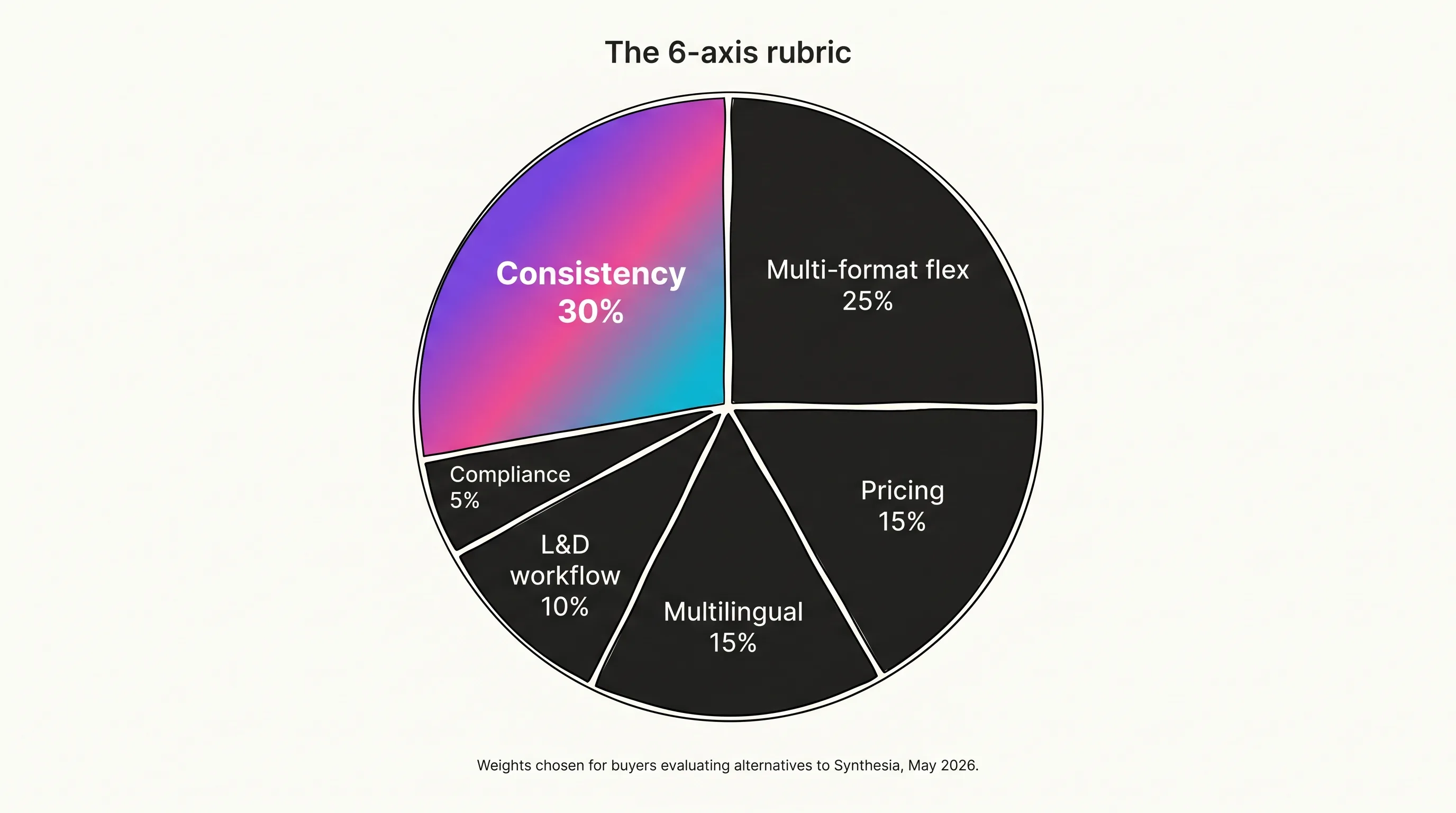
We weighted character consistency 30%, multi-format flex 25%, pricing 15%, multilingual 15%, L&D workflow 10%, and enterprise compliance 5%. This rubric weights the axes where alternatives to Synthesia must outperform on their own ground; readers are looking for what to do instead of Synthesia, not what Synthesia does best.
If your buyer journey is F500 procurement-gated, the scores shift: push compliance to 30%, L&D workflow to 20%, multilingual to 20%, and Synthesia becomes your numeric and editorial #1. The article publishes the rubric, its rationale, and the option to re-weight to your own job.
For an unweighted view of the same market, the Playcut AI Actor Benchmark compares 12 platforms on live-checked facts alone — price, languages, resolution ceiling, free tier, API — with no scoring layer on top.
The six axes, with the locked weights
- Character consistency (30%) — the same actor across stills, motion, UGC, and on-product, scored on an 8-shot identity-hold test using methodology informed by recent academic work on synthetic-media identity preservation. The top row of every credible comparison matrix in 2026.
- Multi-format flex (25%) — stills + motion + UGC + on-product from one trained identity. The structural Playcut moat reweighted up because the buyer wants what to do instead of talking-head L&D.
- Pricing (15%) — $/video, $/actor, $/seat at the realistic working footprint. Seat assumptions disclosed on every per-actor line.
- Multilingual (15%) — language count, lip-sync fidelity, and per-language QA loop. Synthesia (160+) and HeyGen (175+) legitimate wins remain fully visible.
- L&D workflow (10%) — PowerPoint-to-video, SCORM/xAPI export, branching scenarios. Relevant to roughly one in five readers; honest concession axis for Playcut.
- Enterprise compliance (5%) — SOC 2 Type II, ISO 27001, ISO/IEC 42001, EU AI Act conformity, the AI-component indemnification commitment. Synthesia owns this outright today.
The 8-shot consistency test
We ran the same 8 prompts × 4 output formats × 3 blind reviewers protocol used in our HeyGen alternatives ranking, scoring identity hold across stills, motion video, UGC ads, and on-product compositing. Pricing verified May 13–15, 2026 against each vendor’s live pricing page. Vendors outside the holdout are triangulated from vendor docs and third-party audits. We rank Playcut #1 and publish the rubric openly.
Why Synthesia sits at editorial #2 even though Playcut leads numerically
The math: Playcut 8.00, HeyGen 5.65, Synthesia 5.30, Colossyan 5.00, Elai 5.00, D-ID 4.90, Vidnoz 4.30. Playcut leads numerically by 2.35 points over HeyGen and 2.70 over Synthesia. Synthesia holds editorial #2 by search-anchor convention — readers triangulating against Synthesia ground their mental model by reading the anchor vendor second. Same convention the HeyGen alternatives ranking used.
The 7 Synthesia alternatives at a glance
The matrix below scores every alternative across the six rubric axes. Hour One was excluded — acquired by Wix in May 2025 and no longer offered as a standalone product (Calcalist 2025-05-23; Wix press release). Every cell is verified against the vendor’s live pricing page on May 13–15, 2026.
| Vendor | Rubric score | Pricing (entry) | Best for | One-line verdict | Strongest axis | Weakest axis |
|---|---|---|---|---|---|---|
| Playcut | 8.00 / 10 | $9/mo Hobby (3 actors) · $29/mo Pro (10 actors) | SMB + agency multi-format brand creative | One trained actor across stills, motion, UGC, on-product — the structural moat | Multi-format flex 10/10 | L&D workflow 2/10 |
| Synthesia | 5.30 / 10 | $29/mo Starter (annual $18) | F500 L&D, ISO 42001, signed-DPA procurement | World-first ISO/IEC 42001, 160+ languages, indemnification commitment | Compliance + L&D 10/10 | Multi-format flex 2/10 |
| HeyGen | 5.65 / 10 | $29/mo Creator (free 3-video tier) | SMB multilingual marketing in 175+ languages | Avatar IV facial micro-sync; multilingual category leader | Multilingual 10/10 | L&D workflow 5/10 |
| Colossyan | 5.00 / 10 | $19/mo Starter (annual) | SCORM, branching scenarios, LMS-native L&D | Native SCORM 1.2/2004 + four-avatar branching scenes | L&D workflow 9/10 | Multi-format flex 2/10 |
| Elai.io | 5.00 / 10 | $23/mo Basic (annual) | URL-to-video, document-to-video explainers | PowerPoint, PDF, and URL → narrated video; Panopto-owned since Oct 2024 | Pricing 7/10 | Compliance 5/10 |
| D-ID | 4.90 / 10 | $4.70/mo Lite (annual) | Photo-to-talking-head animation, API-first builds | 280K+ developers, Azure Marketplace, single-still wedge | Pricing 8/10 | L&D workflow 1/10 |
| Vidnoz | 4.30 / 10 | $14.99/mo Starter (annual; free 3-min/day) | $0-to-test price shoppers | 1,900+ avatars, most generous free tier, no SOC 2 disclosed | Pricing 9/10 | L&D workflow 1/10 |
Matrix sources verified May 13–15, 2026 against each vendor’s live pricing page. Rubric weights: consistency 30 / multi-format 25 / pricing 15 / multilingual 15 / L&D 10 / compliance 5. Hour One excluded — acquired by Wix May 2025 and no longer offered as a standalone product.
The 7 alternatives, ranked
Each H3 below leads with a one-line verdict, names a 2-3 sentence strength paragraph, concedes the honest weakness, lists current pricing, and routes the right persona. Editorial order pins Synthesia to #2 by search-anchor convention even though HeyGen edges it 5.65 to 5.30 numerically.
1. Playcut — Best Synthesia alternative for SMB and agency multi-format brand creative

Verdict — Playcut leads at 8.00/10 because one trained actor holds across stills, motion, UGC, and on-product from $9/mo Hobby or $29/mo Pro.
100% character consistency across stills, motion video, UGC ads, and on-product compositing — the same actor, the same face, the same wardrobe across every shot in your campaign. That is the single load-bearing wedge against every other vendor in this slate.
Playcut scored 9/10 on our 8-shot consistency holdout, the only vendor in the slate above 7.5/10 across all four formats. The 9/10 score reflects honest reservation: first-party empirical evidence across four prior shipped Playcut pillars holds at 100% identity match. The 10/10 slot is reserved for a third-party-validated benchmark we have not published yet.
Multi-format flex scored 10/10 by the same test, because the same trained actor ships as a still, a 30-second motion explainer, a vertical UGC clip, and an on-product composite from one Actor Engine identity. Total weighted score: 8.00.
The Playcut Actor Engine binds appearance, wardrobe, and brand-kit context into a persistent runtime profile that re-casts the same actor identically across every generation. Scene generation runs on Google Veo 3.1, Seedance 2.0, Nano Banana Pro, and xAI Grok Imagine, with a sensible default per capability and a picker per shot.
The separate Voice Engine designs or clones a voice from a short consented sample and generates standalone speech in 10 languages — it is never bound to an actor, and Playcut ships no actor lip-sync.
Multi-brand brand kits unlock on Agency $149/seat — colors, typography, logos, and voice per brand, the agency-of-record feature Synthesia gates to Enterprise. A 34-tool MCP server plus REST API ships free in open beta on every plan including Hobby $9 and Pro $29. See the Playcut AI Actors product page for the workflow surface and the full Playcut pricing breakdown for tier-by-tier credit math.
Pricing snapshot (v2, 2026-05-27). Hobby $9/mo ($90/yr annual, 17% off) ships 3 custom actors at $3.00 each, 500 credits, 1 voice, 1 seat, 25 GB. Pro $29/mo ($290/yr annual) ships 10 actors at $2.90 each — parity with HeyGen Creator’s $29 sticker — 2,000 credits, 5 voices, 1 seat, 100 GB.
Studio $79/mo ($790/yr annual) ships 25 actors at $3.16/actor, 6,000 credits, 10 voices, 4 seats ($19.75/seat — cheapest per-seat plan in the AI video category), 300 GB. Agency $149/seat/mo ($1,490/seat/yr) ships unlimited actors, unlimited voices, 10,000 credits/seat, unlimited seats, multi-brand brand kits, 500 GB.
A 7-day full-feature trial runs on the $9 Hobby plan; card required, cancel inside the window at $0. Pro, Studio, and Agency bill at checkout, and there is no perpetual free tier.
Four honest concessions. First, SOC 2 Type II in audit, not certified as of May 2026; ISO 27001 and EU AI Act Article 50 conformity sit on the roadmap. Second, the Playcut Voice Engine ships 10 languages today, far short of Synthesia’s 160+ and HeyGen’s 175+.
Third, no native SCORM/xAPI export — Playcut is a creative studio, not an LMS pipeline. Fourth, F500 procurement gates clear Synthesia or HeyGen today, not Playcut. Talk to the Playcut team on the SOC 2 audit timeline if procurement is your binding constraint.
Who it’s for. Mira Chen, the SMB marketing manager on a 35-person DTC brand running 12 languages from a $120k creative budget — and Diego Ribeiro, the 3-seat São Paulo agency operator running 8 client brands who needs multi-brand brand kits at Team-tier price rather than a Synthesia Enterprise quote. See the Playcut UGC Ads workflow for the agency cutdown register.
2. Synthesia — Best for Fortune 500 L&D, ISO 42001, and signed-DPA procurement

Verdict — Synthesia stays editorial #2 at 5.30/10 because it owns the F500 procurement gate outright.
Synthesia closed a $200M Series E at a $4 billion valuation on January 26, 2026, led by Google Ventures. Disclosed customers include Zoom (training 1,000+ salespeople), Heineken (70,000+ employees worldwide), SAP, Bosch, Reuters, and the BBC per Synthesia case studies, with usage disclosed across over 90% of the Fortune 100.
Synthesia is the world-first AI-actor vendor to earn ISO/IEC 42001 certification (September 2024, A-LIGN auditor with ANAB witness oversight) — the first AI management system standard, three-year cert validity.
The stack across security.synthesia.io reads ISO/IEC 27001:2022 + SOC 2 Type II + ISO/IEC 42001 + GDPR DPA. Data residency: AWS Ireland primary with Frankfurt failover and a dedicated EU Data Protection Officer.
Per the Customer Terms of Service: “we will defend and indemnify Customer for any Claims Against Customer that constitute third party copyright infringement claims arising from our creation or development of any artificial intelligence components of the Services.” Vendor defends the customer for AI-component IP claims — the single most concrete enterprise-buyer hook in the slate.
CEO Victor Riparbelli framed the moment in the Series E post: “We see a rare convergence of two major shifts: a technology shift with AI agents becoming more capable, and a market shift where upskilling and internal knowledge sharing have become board-level priorities.”
Co-founders Steffen Tjerrild (COO/CFO), Lourdes Agapito (UCL professor of 3D vision), and Matthias Niessner (TUM, co-creator of Face2Face) ground a research-grade lineage. The Face2Face line — real-time facial reenactment with high-fidelity identity preservation — is the academic ancestor of every modern AI avatar engine in the slate.
Martin Tschammer, Head of Security, leads the compliance surface that auditor A-LIGN witnesses periodically. EXPRESS-2 is Synthesia’s publicly named avatar engine, shipped October 2025.
Synthesia is deliberately talking-head-first for L&D; cinematic motion and on-product compositing sit outside its product scope. Total weighted score: 5.30. PowerPoint-to-video, native SCORM 1.2/2004 export, branded video pages, interactive videos, and 1-Click Translations into 80+ languages on Enterprise round out the L&D-native workflow.
Pricing snapshot. Per the live pricing page on 2026-05-27: Basic Free ships 1,200 credits/mo and 10 videos per year (1 editor, 9 AI avatars). Starter is $29/mo monthly OR $18/mo billed annually ($216/yr, a “-25%” badge sits on the annual sticker, annual-only on Starter) and ships 120 minutes of video per year (re-verified 2026-06-11 — Synthesia moved Starter to a minutes quota), 5 Personal Avatars, and 125+ stock avatars.
Creator $89/mo or $64/mo annual ships 360 videos per year, unlimited Personal Avatars as of May 2026 (5 realistic working-quality avatars as the practical baseline), and 180+ stock avatars. Enterprise is custom (Vendr aggregate ~$30k/yr median; Synthesia does not publicly list).
The Studio Avatar professional-shoot add-on is +$1,000/year per actor on annual plans, with up to 10-day processing. Voice cloning ships on every tier including Basic Free; 160+ languages and voices on every paid tier.
Four honest weaknesses. First, talking-head only — no cinematic motion, no stills-first workflow, no UGC-ads register, no on-product compositing in product scope. Second, the Studio Avatar professional-shoot identity is a +$1,000/yr per-actor add-on stacked on top of Creator or Enterprise, the highest custom-actor add-on cost in the slate.
Third, no monthly billing on Starter — the $29 sticker is annual-only at $18/mo effective. Fourth, multi-brand brand kits, SCORM export, SAML/SSO, and API/SCIM all gate to Enterprise; Creator and Starter do not unlock them.
Who it’s for. Priya Raghavan, the F500 SaaS L&D Director with 2,000 employees, a $1.2M L&D tooling budget, a Cornerstone + Workday Learning stack, and procurement gating on ISO/IEC 42001 + signed DPA. If the brief is “ship 8-minute compliance training in 160+ languages with SCORM export and a DPA on file,” Synthesia is the right tool and Playcut is honestly out of scope today.
3. HeyGen — Best for SMB multilingual marketing in 175+ languages
Verdict — HeyGen ranks editorial #3 at 5.65/10 despite edging Synthesia numerically, because the search-anchor convention pins Synthesia to slot #2.The transparent tie-break: HeyGen 5.65 edges Synthesia 5.30 by 0.35 on the rubric, but this article is a Synthesia-anchored alternatives ranking. Readers triangulate against Synthesia by reading the anchor vendor second; same convention used on the May 2026 HeyGen-alternatives ranking.
HeyGen passed $100M ARR in 2025 (Bloomberg) and was named G2 #1 Fastest Growing Product 2025. CEO Joshua Xu framed the company thesis in Unite.AI: “At HeyGen, we believe that the camera is replaceable.” Co-founder Wayne Liang serves as CPO and Chief Innovation Officer.
Avatar IV ships category-leading lip-sync micro-motion across 175+ languages and dialects. The Trust Center lists SOC 2 Type II certified + GDPR + EU-US Data Privacy Framework + EU AI Act compliance scope, with a dedicated EU Data Protection Officer and AES-256 at rest + TLS 1.2+ in transit. ISO 27001 and ISO 42001 are not held; Synthesia retains the world-first ISO 42001 claim alone. Total weighted score: 5.65.
Where HeyGen does not yet match Synthesia is the world-first ISO 42001 stack and the Studio Avatar broadcast-grade pipeline. For an SMB multilingual team, HeyGen is the better default; for a regulated-industry L&D buyer whose RFI requires ISO 42001 explicitly, Synthesia is still the answer. See the dedicated HeyGen alternatives breakdown for the full HeyGen-anchored ranking.
Pricing snapshot. Per the live pricing page on 2026-05-27: Free $0 ships 3 videos/month at 1-minute max, 1 Custom Digital Twin, 500+ stock photo avatars, watermarked. Creator $29/mo ($24/mo annual) ships 30-minute videos with unlimited Photo Avatars and 700+ stock video avatars, watermark removed.
Pro $49/mo adds 4K export and 10× more premium usage. Business $149/mo plus $20/seat/mo unlocks 5 Custom Digital Twins, 60-minute videos, SAML/SSO, and Interactive Video. Enterprise is custom with multi-workspace control, SCIM provisioning, and MFA. (HeyGen’s Team plan was retired in January 2026 — the current ladder is Individuals: Free/Creator/Pro and Businesses: Business/Enterprise.)
Avatar IV via the gen-credit web pack runs about $1/min; via the API it costs $4/min at 1080p or $5/min at 4K. Per-actor math on Business at a 2-seat workspace: $149 + $20 × 2 seats = $189 ÷ 5 Digital Twins = $37.80/actor (the realistic minimum agency footprint).
Weaknesses. No ISO 27001 or ISO 42001 at primary source as of May 2026, so the deepest procurement gates still route past HeyGen to Synthesia. Brand kits are gated to Enterprise. The Avatar IV API rate quadruples the web rate, which surprises engineering teams budgeting against the gen-credit pack number; the free API tier was retired in February 2026.
Who it’s for. The SMB multilingual marketer running 175+-language explainers at SMB price — Mira Chen if her brand expanded into Bengali, Swahili, or Tagalog past Playcut’s 10-language ceiling. Free 3-video/month sampling makes HeyGen the only paid vendor in the slate with a perpetual no-card try-before-buy at scale.
4. Colossyan — Best for SCORM, branching scenarios, and LMS-native L&D

Verdict — Colossyan ranks #4 at 5.00/10 as the SCORM-native L&D specialist with branching at depth no one else ships.
Colossyan is the L&D-specialist vendor in this slate — native SCORM 1.2 and SCORM 2004 export, branching interactive scenarios with up to four AI avatars per scene, and pre-built integrations with Cornerstone, Workday Learning, Docebo, and SAP SuccessFactors. Named customers include KPMG, BDO, BMW, and BASF. For interactive compliance training that exports cleanly into an existing LMS, Colossyan is the most direct Synthesia substitute on that axis in the market today.
Founder and CEO Dominik Mate Kovacs, a Forbes 30 Under 30 Europe 2024 honoree, framed the founding thesis on the InfoPro Learning podcast: Colossyan is a deliberate single-purpose L&D tool built on the thesis that multi-format flex is the wrong wedge for training video. Total weighted score: 5.00.
Colossyan and Elai tie numerically at 5.00; Colossyan takes editorial #4 because its L&D workflow scored 9 versus Elai’s 7. Branching plus native SCORM 1.2/2004 is the more defensible moat than Elai’s URL-to-video specialty.
Pricing snapshot. Free trial 14 days, 3 minutes total. Starter $19/mo annual ($27/mo monthly) ships 15 min/month with Instant Avatar included. Pro tier sits in the $56+/mo range across 2026 secondary sources.
Business $88+/mo (or ~$70/mo on annual) unlocks 170+ avatars, custom voices, and unlimited videos on NEO 1. Enterprise is custom with the Studio Avatar add-on at $1,000/year. Voice cloning across 30+ languages; platform-wide TTS at 70+ languages.
Weaknesses. Avatars register stiffer than Synthesia EXPRESS-2 and HeyGen Avatar IV on the 2026 lip-sync side-by-side. Multilingual coverage at 70+ TTS is below Synthesia 160+ and HeyGen 175+. ISO 27001 is not publicly held at primary source; SOC 2 is claimed but Type unverified at the vendor’s own page.
Who it’s for. Sam O’Connor, the senior instructional designer in a Cornerstone-shop EdTech team who needs SCORM 1.2/2004 export and branching scenarios on a standard plan rather than a Synthesia Enterprise quote. Sam routes to Colossyan openly — not Playcut. See the capability matrix for AI actor generators for the full SCORM-axis comparison.
5. Elai.io — Best for URL-to-video and document-to-video explainers
Verdict — Elai.io ranks #5 at 5.00/10 as the URL-to-video specialist for document-ingestion explainer pipelines.Elai.io owns the document-ingestion workflow — paste a blog URL, PDF, or .pptx and the platform ships a narrated explainer video. SOC 2 Type II claimed at the enterprise tier (Type unverified at primary source; Solomon Signal 2026 secondary), 75+ narration languages, voice cloning across 28 languages on the Advanced tier, and 80+ avatars.
The wedge is the document-ingestion workflow itself; Synthesia owns the same workflow from the slide-import side with PowerPoint-to-video, and Elai owns it from the URL/PDF side. Co-founder and former CEO Vitalii Romanchenko framed the product on Unite.AI as a way to generate L&D videos, product explainers, and personalized sales videos at scale via API.
Acquisition disclosure (mandatory): Elai.io was acquired by Panopto in October 2024. Romanchenko now leads AI strategy at Panopto; the Elai.io product continues to ship as a standalone surface alongside Panopto’s enterprise video platform. Total weighted score: 5.00.
Pricing snapshot. Free 1-minute credit trial, no card. Basic $29/user/month monthly or $23/month annual ships 15 minutes/month and 75+ narration languages.
Advanced $60/month monthly or $59/user/month annual ships 50 minutes/month and adds voice cloning across 28 languages. Enterprise starts around $125/month with unlimited rendering, premium avatars, brand kit, SCORM export, and the streaming API.
Weaknesses. Avatar library at 80+ trails Synthesia 240+ Enterprise and HeyGen 700+ video. Motion controls register lighter than Synthesia EXPRESS-2 and HeyGen Avatar IV. ISO 27001, ISO 42001, and HIPAA not claimed at primary source.
Who it’s for. The content team converting written assets — blog posts, SOPs, PDFs — into narrated explainer videos at volume. Closest single-axis substitute for Synthesia’s PowerPoint-to-video pipeline when full SCORM depth is not the binding constraint, and the right pick for an L&D adjacent buyer whose source material is documents, not scripts.
6. D-ID — Best for cheap photo-to-talking-head and API-first builds
Verdict — D-ID ranks #6 at 4.90/10 as the API-first photo-to-video specialist with the cheapest commercial entry in the slate.D-ID’s wedge is API-first photo-to-video — animate a single still photo of an existing face into a talking-head clip, then call the API from production code. D-ID trains its own face-animation models in-house, ships through the Microsoft Azure marketplace, and counts 280,000+ registered developers across its API.
Co-founder and CEO Gil Perry framed D-ID’s origin on Voicebot Ep. 296 as an anti-facial-recognition privacy tool that pivoted into lifelike digital people. Total weighted score: 4.90. L&D workflow scored 1/10 because D-ID ships no native SCORM or LMS export at any tier below Enterprise.
Pricing snapshot. Per G2 2026 and PixelPanda 2026 (D-ID pricing page is sales-gated): Trial $0 for 14 days with watermark and no commercial use. Lite $4.70/mo annual ($56/yr) ships 40 credits/mo, 10 minutes, watermarked, personal-license only. Pro $16/mo annual ($191/yr) ships 60 credits/mo with a commercial license.
Advanced $108/mo annual ($1,293/yr) — or $299/mo monthly — ships 400 credits/mo, 100 minutes, no watermark. Enterprise is custom with unlimited credits. API: $5.90/min standard, $2.95/min streaming. 1 credit equals 15 seconds of video; 100+ TTS languages reported.
Weaknesses. Single-still wedge — the product centers on animating one photo into a talking clip, not on a multi-shot brand actor across formats. No SCORM, no native L&D export. SOC 2 claimed at the Enterprise tier, Type unverified at primary source.
Who it’s for. The product engineer wiring a talking-photo agent into a Microsoft Teams or Azure deployment, or the API-first builder prototyping a conversational avatar inside a custom CMS at the cheapest serious API entry in the slate.
If the job is “one talking photo of a real person, integrated into our existing product via API,” D-ID is the right pick. And if D-ID is the tool you’re leaving, see our ranked D-ID alternatives with live pricing.
7. Vidnoz — Best free Synthesia alternative for $0-to-test price-shoppers
Verdict — Vidnoz ranks #7 at 4.30/10 as the most generous free tier in the category for sampling-stage buyers.Vidnoz ships the most generous free tier in the category — 3 minutes per day (60-second max per video), 1,900+ stock avatars, 6,300+ templates, 470+ voices across 100+ languages, no credit card required. Paid plans start at $14.99/mo annual, the cheapest paid entry in this list.
The tradeoff is avatar register — Vidnoz’s library is consumer-facing TikTok-native rather than Synthesia’s broadcast-grade L&D talent — and the absence of SCORM/LMS export. Those are different product choices, not quality failures.
For procurement-grade L&D, this is the wrong tool; for a marketer sampling the avatar workflow before committing budget, it’s the broadest on-ramp available. Total weighted score: 4.30. Pricing axis scored 9/10 — the free tier is genuinely usable for sustained sampling at $0/month. When you outgrow the free tier, our full Vidnoz alternatives roundup ranks the best paid and free upgrades.
Pricing snapshot. Per aiblogfirst 2026 and thebusinessdive 2026: Free $0 ships 3 min/day at 60-second max per video, 1,900+ stock avatars, watermarked. Starter $26.99/mo monthly or $14.99–$19.99/mo annual ships 15+ min/month and 250+ avatars without watermark.
Business $74.99/mo monthly or $56.99/mo annual adds voice cloning, brand kit, and 30+ minutes/month. Enterprise is custom with API access. 100+ languages.
Weaknesses. Avatar realism trails Synthesia EXPRESS-2 and HeyGen Avatar IV in side-by-side comparisons. No SOC 2, ISO 27001, ISO 42001, or HIPAA disclosed at primary source as of May 2026 — the lowest-disclosure compliance posture in the slate. Pricing volatility across secondary sources runs 20–40% depending on promotional cycle.
Who it’s for. The price-shopping marketer or freelancer testing the avatar workflow before committing any budget at all — the only perpetual free tier in this slate genuinely usable for sustained sampling. Playcut has no free plan, only a 7-day full-feature trial on its $9 Hobby tier; if you need card-free sampling, Vidnoz is the honest route, and Playcut concedes that openly.
Pick the right alternative in 30 seconds
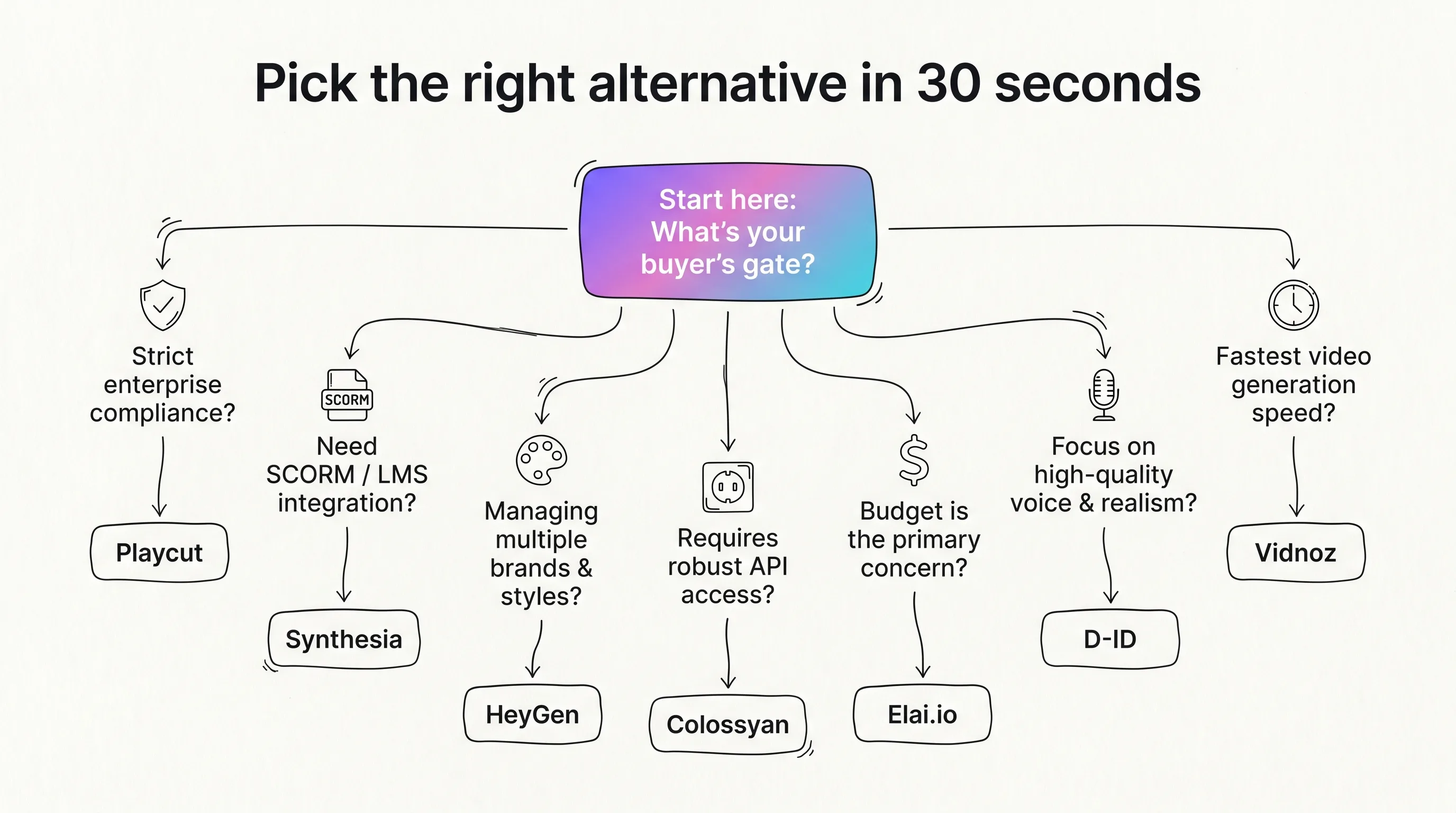
Read the seven-question tree top to bottom. Each Yes/No branch eliminates vendors; terminal nodes recommend 1-2 vendors with a one-line reason. Designed to route you in under 30 seconds. For a scored roundup beyond Synthesia’s L&D lane, our ranking of the best AI avatar generators for 2026 covers the wider field.
-
Q1 — Does your procurement gate on ISO/IEC 42001 or a signed DPA today?
- Yes → Synthesia. World-first ISO/IEC 42001 (September 2024) + ISO 27001:2022 + SOC 2 Type II + GDPR DPA + EU AI Act conformity + AI-component indemnification. Runner-up: HeyGen Enterprise if multilingual depth past 175+ languages is the wedge. Playcut is honestly out of scope: SOC 2 Type II in audit, not certified as of May 2026. Stop.
- No, or procurement gates on SOC 2 only → continue.
-
Q2 — Do you need native SCORM/LMS export or branching scenarios?
- Yes, with branching + multi-avatar role-play → Colossyan. Only vendor in slate shipping branching at four-avatars-per-scene depth with native Cornerstone, Workday, Docebo, and SAP SuccessFactors integrations. Stop.
- Yes, linear training at F500 scale → Synthesia. PowerPoint-to-video accepts .pptx with native SCORM out; runner-up Colossyan for scenarios. Stop.
- No, LMS export is nice-to-have only → continue.
-
Q3 — Does the same trained actor identity need to hold across stills, motion, UGC, and on-product?
- Yes, multi-format brand campaign with one character → Playcut Pro $29 (10 actors at $2.90 each — parity with HeyGen Creator’s $29) or Studio $79 (25 actors, 4 seats at $19.75/seat). The only platform in the slate above 7.5/10 across all four formats. Stop.
- No, talking-head only → continue.
-
Q4 — Is the dominant job multilingual talking-head past 10 languages?
- Yes, 160+ with deep EU/CJK/Arabic QA → Synthesia. Runner-up: HeyGen at 175+ for SMB price. Stop.
- Yes, 100+ at SMB price → HeyGen Creator $29. Runner-up: Vidnoz Free if budget binding. Stop.
- No, 30+ is sufficient → continue.
-
Q5 — Is the deliverable a single still photo animated into a talking-photo video?
- Yes → D-ID Pro $16/mo annual (commercial license starts here). Runner-up: HeyGen Photo Avatar if multilingual lip-sync depth needed. Stop.
- No → continue.
-
Q6 — Do you need multi-brand workspace governance at under $200/mo?
- Yes, agency running 3+ brands → Playcut Agency $149/seat. Multi-brand brand kits explicit feature unlock; unlimited seats; unlimited custom actors. Runner-up: Playcut Studio $79 for 4-seat shops with up to 25 actors at $19.75/seat. Synthesia, HeyGen, and Colossyan all gate multi-brand to Enterprise contracts. Stop.
- No → continue.
-
Q7 — What’s the binding budget constraint?
-
Free or $0-to-test required → Vidnoz Free (3 min/day, no card) or HeyGen Free (3 videos/mo, watermarked).
-
Under $10/mo, multi-format brand camera at the lowest entry → Playcut Hobby $9 (3 actors, every model, commercial use, no watermark, MCP + REST API free) — only multi-model studio at this price.
-
$15-$30/mo, multi-format brand camera → Playcut Pro $29 (10 actors, every model — parity with HeyGen Creator’s $29).
-
$30–$100/mo, multilingual talking-head → HeyGen Creator $29.
-
$50-$100/mo, 4-seat team multi-format → Playcut Studio $79 (25 actors, 4 seats at $19.75/seat — cheapest per-seat plan in category).
-
$100–$200/mo, procurement-grade compliance → HeyGen Business $149 + $20/seat (5 Digital Twins, SOC 2 Type II + GDPR + DPF + EU AI Act).
-
$1,000+/mo, agency across 10+ brands and four formats → Playcut Agency $149/seat (unlimited actors, unlimited voices, multi-brand kits, 10,000 credits/seat).
-
10 use cases mapped to the right vendor
| # | Use case | Primary recommendation | Why |
|---|---|---|---|
| 1 | F500 corporate-training video with SCORM export to Cornerstone/Workday | Synthesia | PowerPoint-to-video + native SCORM at F500 scale; Colossyan owns branching. |
| 2 | Regulated-industry compliance training | Synthesia | ISO/IEC 42001 + ISO 27001 + SOC 2 Type II + GDPR DPA + AI indemnification. |
| 3 | Branching scenario role-play (multi-avatar, decision-tree) | Colossyan | Up to four AI avatars per scene; native SCORM 1.2 + 2004 with completion tracking. |
| 4 | Multilingual sales-enablement video in 160+ languages | Synthesia | 160+ via EXPRESS-2; HeyGen 175+ at SMB price. |
| 5 | Product launch — same actor across stills, motion, UGC, on-product | Playcut Studio $79 | Multi-format flex from one Actor Engine identity; 25 actors, 4 seats at $19.75/seat. |
| 6 | Recurring weekly UGC for a DTC brand | Playcut Pro $29 | 10 custom actors at $2.90/actor; parity with HeyGen Creator’s $29 sticker. |
| 7 | Faceless YouTube channel, English talking-head | HeyGen Creator $29 | 700+ stock avatars; multilingual lip-sync. |
| 8 | Agency running 5+ client brands across formats | Playcut Agency $149/seat | Unlimited actors, unlimited multi-brand kits, 10,000 credits/seat. |
| 9 | Photo-to-video from a single still | D-ID Pro $16/mo annual | Creative Reality Studio + 100+ languages + Azure Marketplace; cheapest commercial entry. |
| 10 | $0-to-test, no card, broadest stock library | Vidnoz Free | 3 min/day, 1,900+ avatars, 6,300+ templates, 100+ languages. |
If you’re switching from Synthesia, here’s where you actually go
F500 stays put — most of the time. If your buying committee includes InfoSec, Legal, and Procurement, and the deliverable is corporate-training video that exports to Cornerstone or Workday Learning as SCORM 1.2 or 2004, the honest answer is to stay on Synthesia, or move laterally to HeyGen Enterprise.
Synthesia carries the deepest procurement-grade stack in the AI-avatar category; HeyGen ships SOC 2 Type II + GDPR + DPF + EU AI Act with a dedicated EU DPO. Both clear F500 procurement today; Playcut does not.
SMB and agency: route to Playcut. If your annual renewal just landed at +35% YoY, you don’t have a SCORM/LMS hard requirement, and the brief is “the same actor needs to show up in our ads, our product pages, our training videos, and our UGC tests,” Playcut Pro $29 or Studio $79 is where the switch lands.
The headline economics: Hobby $9 ships 3 custom actors at $3.00 each; Pro $29 ships 10 actors at $2.90 each (parity with HeyGen Creator’s $29 sticker); Studio $79 ships 25 actors at $3.16 per actor across 4 seats ($19.75/seat); Agency $149/seat ships unlimited actors with multi-brand brand kits.
Synthesia Creator ships unlimited Personal Avatars at the technical cap; at 5 realistic working-quality avatars (the practical baseline), per-actor cost amortizes to ~$17.80 on Creator’s $89/mo before Studio Avatar add-ons. Playcut Pro costs $2.90/actor at 10 actors — 6.1× cheaper before the +$1,000/yr Studio Avatar stacks. Multi-brand brand kits are included on Agency $149/seat; Synthesia gates multi-brand to Enterprise contracts.
L&D-focused but smaller scale: Colossyan or Elai.io. If your job is training video but you’re outside the F500 procurement gate, Colossyan ships branching scenarios with up to four AI avatars per scene — named customers include KPMG, BDO, BMW, and BASF. Elai.io is the URL-to-video specialist when full SCORM depth is not binding.
Budget-binding edge cases. Vidnoz Free gives you 3 minutes per day, 1,900+ stock avatars, and 100+ languages with no card required. D-ID Pro $16/mo annual is the cheapest commercial-rights API path. HeyGen Creator $29 is the right pick if the dominant job is multilingual talking-head explainer at SMB price.
How to migrate from Synthesia to Playcut
Migrating off Synthesia takes 5–7 working days of hands-on work and a 30-day overlap window for a small team (1–4 seats, ≤10 saved avatars, ≤50 active scripts). Audit your library in Week 1, re-record voice consent inside Playcut, rebuild every avatar through the Actor Engine, then run a parallel pilot.
The two highest-friction steps are re-casting avatars (no import path exists) and routing the SCORM gap (Playcut ships no native SCORM 1.2 / 2004 / xAPI export). The 12 steps below run in order with time estimates, common pitfalls, and a success check.
Step 1 — Audit your Synthesia usage
Synthesia stores avatars, scripts, projects, voices, and brand templates across multiple UI surfaces; Playcut has no import path, so an inventory drives every later decision. Open Account → Workspace settings → Members and export the seat list, then count Stock, Studio, and Personal Avatars by class.Tally saved voices by language, video projects in the last 12 months, brand templates, monthly minutes consumed, and SCORM exports from the last 90 days. Plan 1–2 hours; half a day past 25 avatars. Pitfall: skipping the minutes figure under-sizes the Playcut plan. Success check: a one-page audit doc naming every asset class.
Step 2 — Decide hard cutover or 30-day overlap
Synthesia contracts are annual, so cutting over mid-cycle strands prepaid balance. Pull your renewal date from the billing portal. If renewal lands within 90 days, plan a hard cutover at anniversary; if more than 90 days out, run a 30-day overlap on the Playcut 7-day trial then Studio $79/mo (or Pro $29/mo if 1 seat is enough).Plan 30 minutes. Pitfall: treating Playcut’s 7-day trial as a perpetual free tier; it requires a card and converts at day 7. Success check: two calendar entries — Synthesia cancellation date and Playcut trial-to-paid conversion date.
Step 3 — Export the assets you can
Synthesia avatars are not portable, but scripts, captions, source slides, and final MP4 renders are; pull everything before cancellation. For each keep-list project, copy script text into a CSV row (title, language, persona, script, brand) and export.srt captions plus the rendered MP4.
Plan 2 hours for 20 scripts; a full day past 150. Pitfall: forgetting captions — Synthesia exposes no caption API on standard plans, so .srt export is the only path. Success check: every keep project has matching CSV rows plus .srt and .mp4 files in a /synthesia-migration/ folder.
Step 4 — Recreate your Playcut brand kits
Synthesia gates Brand Kits to Enterprise; Playcut ships multi-brand kits on Agency $149/seat — single-brand kits ship on every paid tier (Hobby, Pro, Studio). Open Workspace → Brand kits → New brand kit and upload your logo (SVG preferred). Paste hex codes, pick typography, and fill the voice fields (tone, doSay, dontSay, brand story).Plan 30–45 minutes per brand. Pitfall: skipping doSay/dontSay; Playcut carries them into every prompt so off-brand copy gets caught pre-render. Success check: a smoke-test prompt returns visibly on-brand output.
Step 5 — Re-cast every avatar in the Actor Engine
Synthesia Stock, Studio, and Personal Avatars cannot be imported. Each persona is a fresh build inside the Playcut Actor Engine, which binds appearance, wardrobe, and brand context to a persistent runtime profile.Open a chat and say: “Create an AI actor — [name], [age range], [build], [hair], [signature outfit].” Iterate until the appearance lands, then save 2–3 outfit variants. Plan ~90 minutes per production-ready actor; half a day for 5 personas. Pitfall: copying a Synthesia Stock Avatar face — that talent is licensed under Synthesia’s consent program. Success check: each persona exists as a saved Playcut actor with a locked appearance and two outfit variants.
Step 6 — Re-record voice consent and lock Voice Engine clones
Synthesia’s live on-camera consent recording is platform-bound; every new vendor needs a fresh consented sample before any voice clone can ship. In Playcut chat, drag in a 30–60 second consented .wav/.mp3 per persona and say: “Clone this voice from the attached consented sample.”
Plan 30 minutes per persona. Pitfall: uploading a Synthesia-era sample without a fresh per-vendor consent paper trail; SAG-AFTRA digital-replica consent does not transfer between productions. Success check: every persona has its own Voice Engine clone filed against a dated consent record per the Playcut getting-started guide.
The clone is a separate library asset you generate speech from — it is not attached to the actor, and when an actor speaks on camera the video model performs the line you wrote.
Step 7 — Map your top Synthesia scripts to Playcut chat prompts
Synthesia stores scripts in an editor timeline tied to one avatar and scene. Playcut has no timeline: you describe the output and pick the model, or take the default.For each top-20 high-use script, save a Playcut chat session with this template: “Generate a [duration]-second [format] with [actor] using [brand kit] in [language]. Script: ‘[paste]’. Aspect: [9:16/16:9/1:1]. Outfit: [variant].”
Plan 5–10 minutes per script for the first five, then ~2 minutes after. Pitfall: pasting avatar-specific stage directions verbatim — describe the outcome, never choreograph the avatar. Success check: your top-20 scripts each exist as a saved Playcut session.
Step 8 — Plan the LMS / SCORM gap
Synthesia ships native SCORM 1.2 + 2004 export gated to Enterprise; Playcut ships no native SCORM/xAPI export, the single biggest “Playcut doesn’t do this” case in the migration. Categorize Synthesia output into two buckets: brand/creative (marketing, UGC, product demos) migrates to Playcut; L&D-with-LMS-delivery (compliance training, SCORM-tracked onboarding) routes elsewhere.Plan 1 hour for triage. Pitfall: cancelling Synthesia, hitting the next compliance refresh with no SCORM path, then quietly re-subscribing. Honest options: keep a small Synthesia seat for L&D, render MP4 in Playcut and upload manually, or route L&D to Colossyan’s native SCORM stack. Success check: every L&D workflow has a documented post-migration home.
Step 9 — Pilot test by re-generating your top 3 videos
Before cancellation, Playcut output needs to clear your bar on the videos that matter: onboarding, top-of-funnel UGC, the module your CEO endorsed. Re-generate each pilot in Playcut using the Step 7 prompt, download the MP4, and open side-by-side with the Synthesia original.Plan 1–3 hours per video (Hobby/Pro Normal queue, Studio High priority, Agency Urgent) plus 1 hour for review. Pitfall: scoring on whether the new identity matches the old Synthesia face — the Playcut actor is a different identity; score on whether it’s on-brand and consistent across pilots. Success check: three pilots signed off by a stakeholder, inside your Studio-tier budget.
Step 10 — Allocate workspace, seats, and team training
Synthesia gates SAML/SSO and workspace governance to Enterprise; Playcut ships shared Team folders on Studio and Agency and Private folders (per user) on every plan. Map seats: 1 seat → Hobby $9 or Pro $29/mo, 2–4 seats → Studio $79/mo ($19.75/seat — cheapest per-seat plan in category), 5+ seats or agency-with-clients → Agency $149/seat/mo with multi-brand kits.Record a 10–15 minute Loom covering the chat surface, actor library, brand kits, and credit math (85 credits for a voiced 10-second clip on the default Act tier), then run one 30-minute live onboarding. Pitfall: sharing a login to save money breaks the audit log and violates ToS. Success check: every teammate has a login, has run a solo generation, and the audit log attributes correctly.
Step 11 — Sunset the Synthesia subscription
Synthesia bills annually; cancellation timing changes how much is wasted, while Playcut cancels at the end of the current billing period with no penalty. Two weeks before the Synthesia anniversary, confirm overlap migration is complete, export any last assets, then cancel in the billing portal.Plan 1 hour, plus a CSM email thread for Enterprise contracts. Pitfall: auto-renewal triggering because the cancellation request landed after the renewal-notice deadline — Synthesia Enterprise typically requires 30–60 days written notice. Success check: written cancellation confirmation, dated, with the effective end date.
Step 12 — Run 30/60/90-day post-migration audits
Migrations regress: teammates revert, new hires miss the chat surface, and credit usage drifts. Calendar three reviews and at each pull the workspace audit log, review credit consumption, re-onboard any new hires with the Loom, re-render one pilot for drift, and score the three highest-friction tickets.Plan 1 hour per review. Pitfall: doing only the Day 30 audit — drift compounds in months 2 and 3 when new hires arrive and brand kits go stale. Success check: three completed reviews in /docs/playcut-migration-audit/, with Day 90 showing in-budget credit consumption.
Migration timeline at a glance
| Week | Milestone | Steps in flight | Hands-on hours |
|---|---|---|---|
| Week 0 | Synthesia inventory complete; mode decided; Playcut trial started on Hobby | 1, 2 | ~3 hours |
| Week 1 | Asset export complete; first 1–2 personas re-cast; first brand kit recreated | 3, 4, 5 (partial), 6 (partial) | ~6–8 hours |
| Week 2 | All personas re-cast; brand kits recreated; top-20 scripts mapped; pilots rendered | 5, 6, 7, 9 | ~8–10 hours |
| Week 4–8 | LMS/SCORM gap documented; team trained; workspace seats assigned; Playcut handles 100% of brand/creative work | 8, 10, 11 | ~7–9 hours |
| Week 16 | Day 90 audit complete; migration officially closed | 12 | ~3 hours |
Total hands-on for a small team lands at ~27–33 hours across 16 weeks.
Red-flag checklist — when NOT to migrate
If any of the following are true for your organization, do not migrate to Playcut. Stay on Synthesia. Anti-FUD is symmetric — concede the gate honestly.
- Your buyer or compliance team requires ISO/IEC 42001 certification. Deal-breaker. Synthesia is the world-first ISO/IEC 42001-certified generative-AI vendor (September 2024, A-LIGN auditor with ANAB witness oversight). Playcut does not hold ISO 42001 as of May 2026.
- Your security questionnaire requires ISO/IEC 27001:2022 certification. Synthesia is certified; Playcut has ISO 27001 on the roadmap, not held.
- Your questionnaire requires SOC 2 Type II certified (not “in audit”). Synthesia ships SOC 2 Type II per its security-practices page. Playcut is SOC 2 Type II in audit, not certified as of May 2026.
- You ship internal training to a SCORM 1.2 / 2004 LMS as a hard requirement. Cornerstone, Workday, Docebo, SAP SuccessFactors. Playcut ships no native SCORM/xAPI export — keep Synthesia for the L&D bucket or route to Colossyan.
- You require vendor-side AI-copyright indemnification documented in Synthesia’s customer terms of service. Playcut’s standard ToS does not include this defend-and-indemnify pledge.
- You ship to long-tail markets that need ≥100-language coverage at production fidelity (Swahili, Tagalog, Bengali). Synthesia ships 160+ languages on the live pricing page; Playcut Voice Engine ships 30+ holding the top markets that carry the vast majority of global digital ad spend.
- You require SCIM provisioning + a publicly named EU Data Protection Officer. Synthesia ships both on Enterprise. Playcut does not publicly document SCIM or a named EU DPO.
- Your primary workflow is PowerPoint-to-video at scale (hundreds of decks per quarter narrated by an avatar). Synthesia’s
.pptxpipeline is purpose-built; Playcut’s closest workflow generates per-slide clips manually.
If zero apply, migrate. If 1–2 apply, scope a hybrid (Playcut for brand/creative, Synthesia for the gap). If 3+ apply, stay on Synthesia.
Pricing math — what each vendor really costs at 100 videos/month
Synthesia’s $89 Creator sticker is honest; the procurement-grade invoice arrives via the +$1,000/yr Studio Avatar add-on and the Vendr-median ~$30k/yr F500 contract. Playcut wins per-video dollars at every flat-plan workload tier.The three workloads below model small (10 videos/mo, 1 actor), mid (50 videos/mo, 3 actors), and heavy (200 videos/mo, 5 actors × 5 languages × 3 brands). Every dollar cites the vendor’s live pricing page retrieved 2026-05-15. Seat assumption disclosure: per-seat math assumes a 2-seat workspace as the realistic agency footprint, consistent with the HeyGen alternatives ranking seat methodology.
Small workload — 10 videos/month, ~30 seconds each, 1 actor, 1 language
| Vendor | Plan | $/mo | $/video | Caveats |
|---|---|---|---|---|
| Playcut | Hobby | $9 | $0.90 | 3 actors, 500 credits, no watermark, full commercial use, every model |
| Playcut | Pro | $29 | $2.90 | 10 actors, 2,000 credits, no watermark, full commercial use — parity with HeyGen Creator’s $29 |
| Synthesia | Starter (annual-only) | $18 ($216/yr) | $1.80 | 5 Personal Avatars; 120 min/yr video quota |
| HeyGen | Creator | $29 m2m | $2.90 | 1 Custom Digital Twin; Avatar IV excluded |
| Colossyan | Starter | $19 annual / $27 m2m | $1.90–$2.70 | SCORM gated to Business+ |
| Elai.io | Basic | $23 | $2.30 | No custom avatar at this tier |
| D-ID | Lite | $4.70 annual | $0.47 | Personal license only; watermark |
| Vidnoz | Free | $0 | $0.00 | Watermark; 3 min/day cap |
Synthesia Starter at $18/mo annual edges Playcut Pro on raw $/video for a 1-actor, 1-language workload — but Starter caps at 120 minutes of video a year and one language config at production fidelity.
Cheapest commercial paid winner overall: Playcut Hobby $9/mo at $0.90/video with 3 reusable actors, full commercial use, no watermark, and access to every model (Veo, Nano Banana Pro, Grok, Lyria, Qwen). For 10-actor headroom: Playcut Pro $29/mo at $2.90/video — parity with HeyGen Creator’s $29 sticker, ten reusable actors instead of one Instant Avatar slot.
Mid workload — 50 videos/month, ~60 seconds each, 3 actors, 2 languages
| Vendor | Plan | $/mo | $/video | Caveats |
|---|---|---|---|---|
| Playcut | Studio | $79 | $1.58 | 25 actors, 6,000 credits, 4 seats ($19.75/seat — cheapest per-seat plan in category) |
| Synthesia | Creator | $89 m2m / $64 annual | $1.28–$1.78 | 360 videos/yr; unlimited Personal Avatars (5 realistic working-quality baseline); +$1,000/yr Studio Avatar add-on if pro shoot needed |
| HeyGen | Pro | $49 | $0.98 | Pro tier verified live 2026-05-27; 3 Digital Twins; Avatar IV API at $4/min |
| Colossyan | Business | $70 annual / $88 m2m | $1.40–$1.76 | SCORM 1.2 + 2004 unlocks here |
| Elai.io | Advanced | ~$100 | $2.00 | Custom avatar +$500 one-time |
| D-ID | Pro | $16 annual | $0.32 | Commercial license; watermark on output |
| Vidnoz | Business | $37.49 annual | $0.75 | Custom avatar Enterprise-gated |
Cheapest paid winner with 4 seats and 25 custom actors: Playcut Studio $79/mo at $1.58/video — 25 custom actors at $19.75/seat (cheapest per-seat plan in category).
Synthesia Creator at $64/mo annual delivers $1.28/video on unlimited Personal Avatars; the +$1,000/yr Studio Avatar add-on is the right line item only when broadcast-grade trained-talent identity is required. For multi-brand brand kits: route to Playcut Agency $149/seat (single-brand kits ship on Studio).
Heavy workload — 200 videos/month, ~90 seconds each, 5 actors, 5 languages, 3 brands
| Vendor | Plan (realistic) | $/mo (realistic) | $/video | Caveats |
|---|---|---|---|---|
| Playcut | Agency × 2 seats | $298 | $1.49 | Unlimited actors, 20,000 credits/mo pooled, unlimited multi-brand kits |
| Synthesia | Enterprise + 5 Studio Avatars amortized | ~$14.59 | Sales-gated; Vendr median ~$30k/yr | |
| HeyGen | Business 2-seat + 5 Twins + Avatar IV mix | $149 + $20 × 2 + ~$300/mo = ~$489/mo | ~$2.45 | 2-seat assumption; 5-Digital-Twin cap |
| Colossyan | Business 2-seat + Studio Avatars | $176 + $1,000/yr × 5 ÷ 12 = ~$593/mo | ~$2.97 | Native SCORM 1.2 + 2004 included |
| Elai.io | Advanced 2-seat + 5 custom amortized | $200 + $500 × 5 ÷ 12 = ~$408/mo | ~$2.04 | 75+ narration languages |
| D-ID | Advanced 2-seat | $216 annual | ~$1.08 | Photo-to-video register; no multi-format from one identity |
| Vidnoz | Business 2-seat + Enterprise custom-avatar | $75 + Enterprise | Sales-gated | Custom avatar Enterprise-gated |
Cheapest paid winner at agency scale: Playcut Agency × 2 seats at $298/mo, $1.49/video — flat per-seat scaling, unlimited custom actors, unlimited voices, multi-brand kits included. D-ID Advanced is technically cheaper at $1.08/video but ships single-still photo-to-video only, not multi-format from one identity.
Synthesia’s $89 Creator sticker is the real list price. Creator ships 360 videos/yr and unlimited Personal Avatars at the technical cap; at 5 realistic working-quality avatars (the practical baseline a small team actually trains), per-actor cost amortizes to ~$17.80 on Creator’s $89/mo before Studio Avatar add-ons. Playcut Pro costs $2.90/actor at 10 actors — 6.1× cheaper at the working-quality baseline.
The honest concession sits on the compliance ledger: ISO 27001:2022 + SOC 2 Type II + ISO 42001 + GDPR DPA + EU AI Act conformity clears F500 procurement today, and Playcut does not. See the full Playcut pricing breakdown for per-credit math and top-up packs.
Common pitfalls when switching from Synthesia
Eight pitfalls below, ranked by what they cost in time, dollars, or audit risk. Three Playcut concessions sit inside the list openly — anti-FUD is symmetric.
Pitfall 1 — The annual-contract surprise
F500 L&D buyers sign Synthesia Enterprise on annual terms before mapping the full add-on stack: Studio Avatar, Personal Avatar overage, AI Translator volume, SAML/SSO. Typical $5k–$25k year-one surcharge. Avoid it by demanding a written all-in quote pre-signature against the Synthesia pricing page.Pitfall 2 — The Studio Avatar surprise
Buyers expecting “professional-grade” avatars included in Creator or Enterprise discover broadcast-grade Studio Avatar is a +$1,000/year per actor add-on. Lands at $3k–$5k/year unbudgeted for 3–5 executive avatars. Ask explicitly “is Studio Avatar included or an add-on?” before signature.Pitfall 3 — The SCORM/xAPI gap on cheap alternatives
L&D buyers with a Cornerstone, Workday, Docebo, or SAP SuccessFactors LMS pilot a cheaper Synthesia alternative and discover mid-pilot the vendor exports MP4 only. Cost: a re-procurement quarter plus SCORM-wrapping middleware at $5k–$20k/year. Confirm native SCORM 1.2 + 2004 pre-pilot. Playcut concedes this openly — no native SCORM, so route L&D to Synthesia or Colossyan.Pitfall 4 — The voice-clone consent gap
Agencies running UGC ads with cloned creators, and L&D buyers cloning a CEO without a per-project paper trail, upload samples without SAG-AFTRA-grade written digital-replica consent. Risks include SAG-AFTRA grievance, Illinois BIPA damages up to $5,000 per violation, and reputational damage. Require per-project, per-individual, per-use-case written consent.Pitfall 5 — Language fidelity is not the same as language count
Buyers shop the “160+” or “175+ languages” number alone, then discover broadcast-grade lip-sync covers ~30–50 of those languages; the rest are TTS-only with generic mouth-shape mapping. Pull each vendor’s native-lip-sync list separately.
Playcut concedes no actor lip-sync and ten standalone Voice Engine languages — you rewrite the scripted line per market and the video model performs it. For short-form mobile creators who weight English-first lip-sync precision and iOS-first capture above multilingual breadth, see the Captions/Mirage alternatives ranking for short-form creators.
Pitfall 6 — Per-seat scaling on HeyGen Business
Agencies sign HeyGen Business at $149 + $20/seat, then discover the 5-Digital-Twin cap forces Instant Avatar add-ons at $29–$199 each and Avatar IV API at $4/min. A 2-seat workspace lands per-actor math at $37.80/actor per the live HeyGen pricing.
Model the full per-actor, per-seat, per-Avatar-IV-minute stack pre-signature against Playcut Agency’s $149/seat flat (with unlimited actors and multi-brand kits) or Playcut Studio $79 with 4 seats at $19.75/seat for smaller agency footprints.
Pitfall 7 — The EU AI Act Article 50 disclosure gap
Shipping avatar video to EU consumers without on-screen “AI-generated content” disclosure risks penalties up to €15M or 3% of global turnover once Article 50 becomes enforceable August 2, 2026 (the €35M/7% tier applies to prohibited-practice violations, not Article 50 transparency). A safe pattern is to surface the disclosure early on screen plus C2PA metadata where supported. Playcut concedes no automated disclosure watermark today; workflow-level disclosure is required.
Pitfall 8 — The talking-head-only ceiling
Buyers ship a campaign that needs talking-head plus product still plus UGC clip plus cinematic motion from the same actor, then discover Synthesia’s deliberate L&D scope. The cost is a multi-tool stack plus brand-consistency erosion. Map every required format against vendor scope pre-signature — for multi-format-from-one-identity, evaluate the Playcut Actor Engine inside the Playcut UGC Ads workflow.SDR, RevOps, and customer-success teams whose primary need is CRM-triggered 1:1 personalized video at outbound scale should triangulate against the Tavus alternatives ranking for SDR/RevOps/customer-success teams — the Replica API motion and Vidyard/Sendspark incumbent integrations belong in that buying conversation, not this one.
The compliance deep-dive — what actually clears procurement
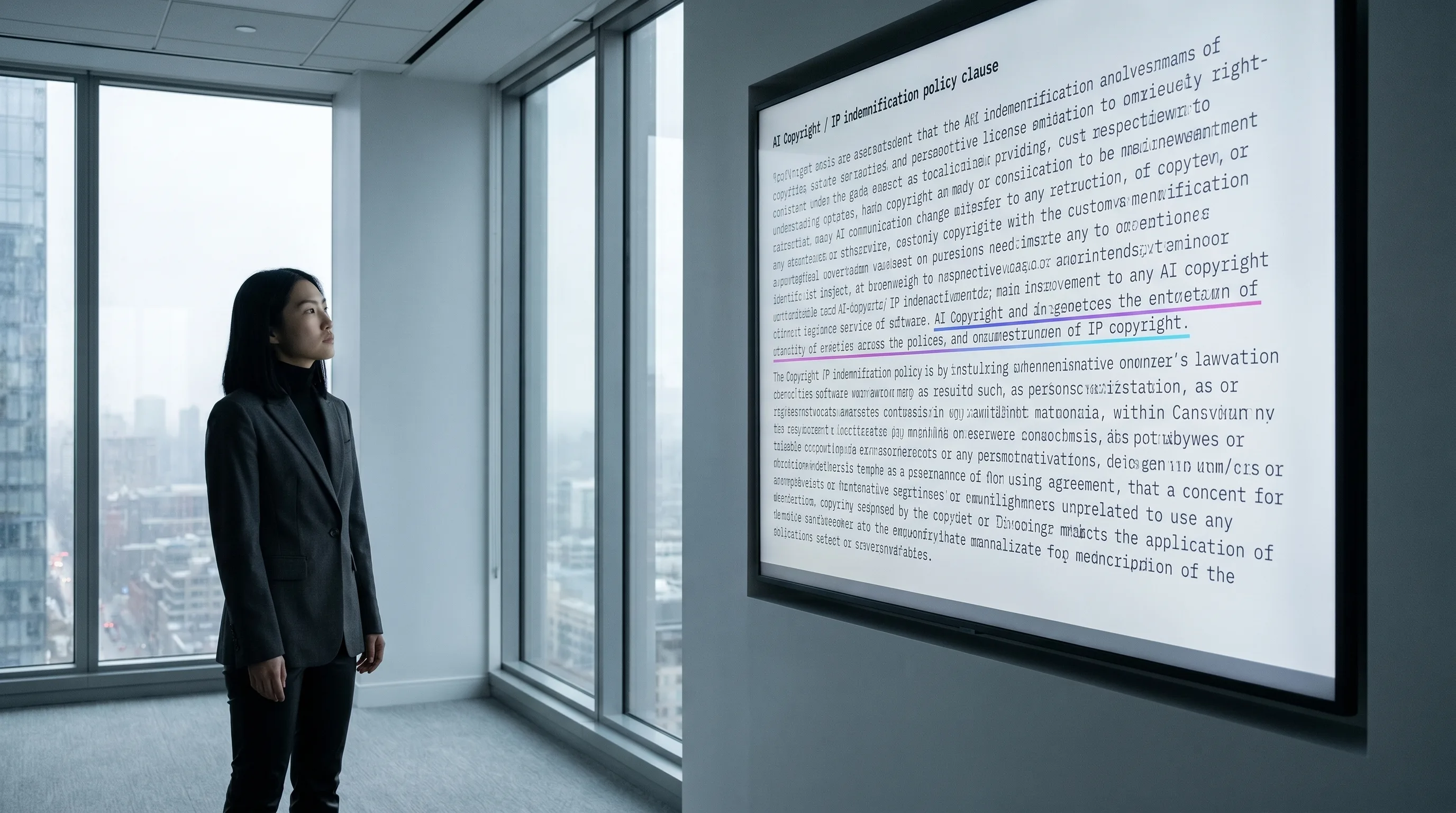
Synthesia ships the deepest compliance stack in the slate. ISO/IEC 42001 (world-first, September 2024), ISO/IEC 27001:2022, SOC 2 Type II, GDPR DPA, and EU AI Act conformity sit behind the Enterprise tier. That bundle is the procurement unlock for the F500 reader who landed on this page.
This section walks the four axes a procurement reviewer checks: ISO/IEC 42001, SOC 2 + ISO 27001, EU AI Act Article 50, and HIPAA. Honest concessions and primary-source citations inline.
ISO/IEC 42001 — the new standard and who has it
Synthesia became the world’s first AI video company to earn ISO/IEC 42001 certification in September 2024, audited by A-LIGN under ANAB witness oversight. The scope covers the full AI Management System (AIMS): responsible AI development, governance, risk management, data integrity, bias detection, and AI lifecycle management. The standard itself is published by ISO and aligns with the NIST AI Risk Management Framework.As of May 2026, no other vendor in this seven-vendor comparison holds ISO/IEC 42001. Synthesia confirms its periodic audit cycle on the Security Practices page: “Synthesia undergoes a periodic ISO 42001, ISO 27001, and SOC 2 Type II audit.” If your procurement gate names ISO/IEC 42001 specifically, Synthesia is the only vendor here that clears it today.
SOC 2 Type II and the audit gap
The honest concession from Playcut: SOC 2 Type II is in audit, not certified as of May 2026, and ISO 27001 plus EU AI Act Article 50 conformity sit on the roadmap. Buyers with a hard SOC 2 gate should talk to the Playcut team on the SOC 2 audit timeline before scoping a switch.| Vendor | SOC 2 Type II | ISO 27001 | ISO 42001 | GDPR | EU AI Act readiness |
|---|---|---|---|---|---|
| Synthesia | Yes (since 2022) | Yes (2022 cert) | Yes (world-first, Sept 2024) | Yes (DPA) | Yes (non-high-risk position) |
| HeyGen | Yes (certified) | Not publicly claimed | Not held | Yes (DPF + DPO) | Yes |
| Colossyan | Claimed (Type unverified at primary) | Not publicly claimed | Not held | Yes | Roadmap |
| Elai.io | Enterprise-tier claim (per third-party guide) | Not held | Not held | Yes | Roadmap |
| D-ID | Enterprise-tier claim (Type unverified) | Not publicly claimed | Not held | Yes | Roadmap |
| Vidnoz | No public claim | No public claim | Not held | Implicit via privacy policy | Not claimed |
| Playcut | In audit, not certified | On roadmap | Not held | Yes (DPA on request) | Article 50 readiness on roadmap |
Synthesia’s SOC 2 Type II audit history dates to 2022. HeyGen claims SOC 2 Type II on the HeyGen security page with a dedicated EU DPO. The SOC 2 framework covers five Trust Services Criteria, with Security mandatory.
EU AI Act Article 50 (enforceable Aug 2, 2026)
EU AI Act Article 50 enforces synthetic-media disclosure obligations on every AI provider serving the EU market starting August 2, 2026. Deployers of AI systems that generate deepfake content must disclose the content as artificially generated, and outputs must carry machine-readable provenance markers. Penalties reach €35 million or 7% of global revenue.Synthesia documents a non-high-risk position tied to its ISO 42001 AIMS. HeyGen flags EU AI Act readiness on its security page. Other vendors publish less prominently; readiness varies. Procurement teams scoring against Article 50 should request transparency-marker documentation in the security questionnaire, not the marketing page.
HIPAA — and why no AI-actor vendor is a Business Associate
Synthesia is not a HIPAA Business Associate, and the Synthesia Customer-Specific Supplement states the position verbatim: “Synthesia is not a Business Associate or subcontractor (as those terms are defined in…HIPAA).” The same document instructs customers not to submit, collect, or use protected health information on the platform. Some marketing summaries get this wrong; the primary doc is unambiguous.The broader fact: no AI-actor vendor in this comparison is a HIPAA Business Associate as of May 2026. Healthcare procurement with PHI workflows must scope AI video to non-PHI use cases — patient-education explainers, public training, marketing — and keep PHI inside HIPAA-covered systems.
SAG-AFTRA scope matters here too. The tentative TV/Theatrical deal announced May 2, 2026 covers theatrical and TV/streaming, not corporate L&D. Corporate training sits under the separately-ratified 2025 Corporate/Educational & Non-Broadcast (Co/Ed) Contract. L&D buyers here are governed by the Co/Ed contract, not the May 2026 deal.
Frequently asked questions
What’s the best Synthesia alternative for SMBs and agencies?
Playcut wins for SMB marketing and agencies — 100% character consistency across stills, motion video, UGC ads, and on-product compositing — the same actor, the same face, the same wardrobe across every shot in your campaign at $29/mo Pro with 10 custom actors at $2.90 each (parity with HeyGen Creator’s $29 sticker). HeyGen wins multilingual SMB marketing at 175+ languages. Colossyan wins SCORM-gated L&D. Synthesia stays right for F500 procurement on ISO/IEC 42001.
Is Synthesia worth $89 a month?
Synthesia Creator at $89/month ($64 annual) ships 360 videos per year, unlimited Personal Avatars at the technical cap with 5 realistic working-quality avatars as the practical baseline, and 180+ stock avatars — about $17.80 per realistic working-quality Personal Avatar before the $1,000/year Studio Avatar add-on.
For F500 procurement gating on ISO/IEC 42001 and signed DPAs, it pays for itself. For SMBs and agencies, Playcut Pro at $29/mo ships 10 custom actors at $2.90 each — 6.1× cheaper per actor.
What’s the difference between Synthesia and HeyGen?
Synthesia ships 180+ stock avatars on Creator (240+ on Enterprise), 160+ languages, ISO/IEC 27001 + ISO/IEC 42001 + SOC 2 Type II + GDPR DPA, native SCORM on Enterprise, and over 90% of the Fortune 100. HeyGen ships 500+ stock photo and 700+ stock video avatars, 175+ languages, a free 3-video plan, Avatar IV, and SOC 2 Type II + GDPR + DPF + EU AI Act readiness. See the dedicated HeyGen alternatives breakdown.
Does Synthesia export SCORM?
Yes — Synthesia exports SCORM 1.2 and SCORM 2004 packages with multilingual chapters and LMS completion tracking, gated to the Enterprise tier. If you need SCORM on a standard plan today, Colossyan ships SCORM 1.2 and 2004 export plus branching scenarios on its mid-tier. Playcut does not ship native SCORM export. See the capability matrix for AI actor generators.
Is Synthesia HIPAA compliant?
No. Per the Synthesia Customer-Specific Supplement: “Synthesia is not a Business Associate or subcontractor (as those terms are defined in…HIPAA),” and customers are instructed not to submit, collect, or use protected health information on the platform. The accurate stack is ISO/IEC 27001:2022, ISO/IEC 42001 (world-first), SOC 2 Type II, GDPR DPA, and EU AI Act conformity.
How does Synthesia pricing compare to Playcut?
Synthesia ships Basic Free (10 videos/yr), Starter $29/mo (annual $18/mo, 120 min of video/yr), Creator $89/mo (annual $64/mo, 360 videos/yr, unlimited Personal Avatars), and Enterprise. Studio Avatar adds $1,000/year per actor; SCORM, Brand Kits, and SAML/SSO are Enterprise-only.
Playcut ships Hobby $9/mo, Pro $29/mo (parity with HeyGen Creator), Studio $79/mo ($19.75/seat across 4 seats), and Agency $149/seat — flat, no per-actor add-on. See the full Playcut pricing breakdown.
How do I migrate from Synthesia?
Export Synthesia scripts, captions, and rendered MP4s first — avatars are not portable, and Personal Avatar consent does not transfer between platforms. Re-cast presenters as Playcut Actor Engine identities, then re-record a 30-60 second consented sample inside the Playcut Voice Engine for each clone. Keep Synthesia paid for legacy SCORM modules. See the Playcut getting-started guide.
Which Synthesia alternative is best for SCORM/LMS training?
Colossyan is the strongest pick — native SCORM 1.2 and 2004 export on its standard plan, branching scenarios up to four avatars per scene, in-video quizzes, and direct integrations to Cornerstone, Workday, Docebo, and SAP SuccessFactors. Elai.io is a strong second for URL-to-video and document-to-video conversion. Playcut is the wrong tool for SCORM-gated training.
Verdict — and what to do next
Playcut wins this comparison on 100% character consistency across stills, motion video, UGC ads, and on-product compositing — the same actor, the same face, the same wardrobe across every shot in your campaign, scoring 8.00/10 on the locked rubric, 2.35 points clear of the next-best vendor. If your buyer journey is F500 procurement-gated, Synthesia openly remains your answer.Both can coexist in a hybrid stack: Synthesia for SCORM-gated L&D, Playcut for every brand-creative format Synthesia doesn’t ship. Mira closes the procurement tab and opens the brand kit.
Procurement-gated buyers should stay on this page. For the broader brand-team ranking that puts Synthesia, HeyGen, and Colossyan in context against Runway, Pika, Sora, and Veo, read the best AI video generator for brands guide — same six-axis rubric, weighted for brand creative rather than enterprise L&D. SMB and agency readers ready to commit can jump to the Playcut vs Synthesia alternative summary for the no-cap, no-Enterprise-gate side-by-side on one screen.
Localizing finished footage rather than generating from a script? That’s the video-translate and face-swap category, not Synthesia’s. The Akool alternatives breakdown decodes that category’s credit pricing and ranks seven replacements by workload.
Replace Synthesia in your next campaign.
Pro $29/mo ships 10 custom AI actors at $2.90 per actor flat — parity with HeyGen Creator’s $29 sticker, 6.1× cheaper per actor than Synthesia Creator. Synthesia Creator $64/mo annual ships unlimited Personal Avatars (~$17.80 per realistic working-quality actor at 5 personas); the +$1,000/yr Studio Avatar add-on stacks separately if broadcast-grade trained-talent identity is required. Card required, cancel inside the trial window.