
One product photo.
Twelve editorial scenes.
AI image generator built for brands. Upload your product, render a full editorial set in minutes. Add a custom AI actor for on-product compositing — same face across every still. Eight studio photographer filters included. Brand-kit consistent. From $9/mo.
1K · 2K · 4K · 10 native aspect ratios · 8 studio filters · brand-kit aware
One product photo. Twelve studio scenes.
Zero photographers.
Upload your product. Playcut renders an editorial-grade set across the scenes you actually need — lifestyle, on-shelf, lookbook, marketplace hero, social square. Brand-kit consistent across every SKU.
- Upload one product photo — output a full editorial set
- Brand-kit consistent across every SKU and channel
- Marketplace-ready: Shopify, Etsy, Amazon, Lazada formats
- With or without an AI model — your call per shot
- You own the assets — commercial use included
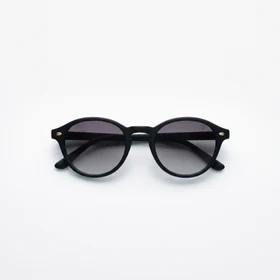
One source photo → twelve editorial-grade variants in minutes. Each scene brand-kit-aware.
Like having a photographer on set.
Pre-built shoot styles tuned by working photographers — lighting, lens, mood, framing. Apply any filter to any actor in your library. Same Mira, eight studio looks.
Same Mira across every filter — proof of character consistency under any lighting register. Click any tile to see the full frame.
Your custom AI actor. Wearing your product.
In stills and motion.
Lookbook stills, lifestyle reels, demo videos — all from the same actor you built. Character consistency you can build a brand on.
- Build custom AI actors — unique to your brand, not stock
- 100% character consistency across every SKU and shot
- Same actor in stills AND motion — character holds up across formats
- On-product compositing — actor holds, wears, uses your real product
- Brand-kit aware — colors, lighting, palette stay consistent
- Studio photographer filters — editorial light, golden hour, lookbook
- Commercial use included — no model-release fees, no 1099s, you own it
Full studio from $9.
Nothing else comes close.
Most AI photoshoot tools either give you a stock library, gate custom actors behind enterprise sales, or break consistency after the third shot. We built Playcut because we were sick of all three.
| What ecom buyers ask | Playcut | Botika | Lalaland | Arcads | HeyGen | Flair.ai |
|---|---|---|---|---|---|---|
| Build your OWN custom AI actors Not a stock library — actors unique to your brand. | Unlimited | None | Enterprise sales | Pro tier only | 1–10 capped | Up to 15 |
| 100% consistency across 15+ products Same face, body, hair across every shot. The hard one. | Yes — tested | Drift | Drift | Talking-head only | Talking-head only | Drift |
| Same actor in stills AND motion video | Both | Stills only | Stills only | Motion only | Motion only | Stills only |
| Wearing/holding your real product Actor in scene with your actual SKU — not just background composite. | Yes | Yes | Limited | Held in hand | No | Background only |
| Studio photographer filters built-in Editorial light, golden hour, softbox, lookbook — pre-built shoot styles. | 8 filters | Background presets | No | No | No | Templates only |
| Multi-brand brand kits per workspace | Yes | No | No | Limited | No | No |
| Image + video + UGC + product in one tool | All four | Stills mostly | Stills only | UGC video only | Video only | Stills only |
| Commercial use & ownership included | Yes | Yes | Yes | Yes | Yes | Pro+ tier |
| Starting price | $9/mo | $22/mo | Sales-gated | $77/mo (was $110) | $29/mo | $8/mo |
| Price for 10+ custom actors 10 reusable AI actors trained on your brand. | $29 (Pro) | Never | Sales-gated | $385 (Pro custom) | $149 (Business) | $55 (Pro+) |
Pricing verified 2026-05-27 from each vendor's public pricing page. Lalaland.ai redirects to Browzwear post-acquisition (no public self-serve pricing). Arcads pricing sourced from publicly indexed reviews — their /pricing page is login-gated; Starter is currently discounted to $77 from a $110 sticker price. Flair Pro+ moved from $26 to $55 in 2026.
Common questions
How does Playcut's AI image generator work? +
Upload a product, describe a scene, or call a saved AI actor by name. You pick the image model — Nano Banana Pro (the default), Nano Banana 2, or Grok Imagine — and Playcut renders it. Every output respects your brand kit (palette, typography, voice) and any custom actor you've built. One product photo expands to twelve editorial scenes in minutes.
Can the AI image generator render my product specifically? +
Yes — upload your product photo and Playcut composites it into editorial scenes (wet marble + droplets, pastel cloud, infinity-curve white e-com hero, lookbook tonal palette, vacation poolside, social hero, etc.) with the actual SKU on screen. The product's silhouette, colors, and labels are preserved across every scene.
What's the difference between Playcut and Photoroom or Pebblely? +
Photoroom and Pebblely are product-only — they remove backgrounds and composite onto generated scenes, but they don't render people. Playcut renders both products AND people in the same image, with your custom AI actor holding, wearing, or using the SKU. Plus Playcut includes 8 studio photographer filters (Editorial Light, Studio Softbox, Golden Hour, Lookbook Day, E-com Hero, Neon Night, Macro Detail, Lifestyle Café).
Are the images brand-kit consistent across batches? +
Yes. Tag a brand kit on any generation and every image in the batch respects the palette, typography rules, logo placement, and brand voice. Multi-brand brand kits per workspace mean an agency can hold a separate brand kit for each client and switch on the fly.
What aspect ratios and resolutions are supported? +
1:1, 2:3, 3:2, 3:4, 4:3, 4:5, 5:4, 9:16, 16:9, 21:9 — native generation at each ratio with no cropping. Output resolution: 1K, 2K, or 4K. Grid output formats (2×2, 3×3, 4×4) for batch comparison views.
Is commercial use included? +
Yes — every Playcut plan includes commercial use. You own every output. No watermark on paid outputs, no per-image licensing fees, no model-release liability for custom AI actors.
Why one product upload should be all you need
Traditional product photography for a single SKU runs between $200 and $1,500 depending on the studio tier, plus retouching, plus a separate budget every time you need a new scene or seasonal variation. The math gets brutal at scale: a DTC brand with 80 SKUs that wants 12 contextual scenes per product is looking at 960 shoot setups. Even at the cheapest tier, that's a six-figure annual photography line that most brands can't justify outside the flagship hero campaign. AI image generation collapses that line item by an order of magnitude — and when the AI generator preserves the actual product (not a fuzzy approximation), it becomes a real production tool rather than a placeholder factory.
Playcut's AI image generator was built around the one upload that matters: your product photograph. Drop a clean reference shot, then describe twelve different scenes, lighting registers, model archetypes, or seasonal contexts. The output is the same product — same shape, same proportions, same logo placement, same surface texture — composed into every scene you described. That's the workflow we test against. It's also the workflow we built the credit pricing around, so the cost-per-scene stays predictable as you scale.
The four image flows the studio supports
- Text-to-image. The standard flow — describe what you want, pick a model in the studio's model picker (or take the Nano Banana Pro default), and you get a still back. Best for moodboard generation, exploratory ideation, and any image where the subject doesn't need to match an existing reference.
- Reference-to-image. Drop a product photo or actor reference, describe the new scene, and the output preserves the reference identity while changing everything around it. This is the workflow that ships the highest volume of real campaign work — product shots in twelve different contexts, actors in different outfits or environments, packaging variants on different surfaces.
- Actor still generation. Pick a custom AI actor from your library and generate a still where the actor wears or holds your product. The actor's face stays consistent across every generation in the workspace. Pair with the AI Actors studio to build the actor library first.
- Batch reference-to-image. Queue 12+ scenes against a single reference upload and let the studio process them in parallel. Output lands as a downloadable ZIP or stays organized in the workspace folder structure for direct handoff to your asset management system.
Which of the three image models should you pick?
The single biggest reason creators outgrow point-tools is that no single image model is best at every task. Playcut ships three, and you choose per generation in the studio's model picker. There is no classifier deciding for you — Nano Banana Pro is the default, so if you never touch the picker, that's what renders.
- Nano Banana Pro (Google) — the default. 67 credits at 1K and 2K, 84 at 4K. Highest fidelity and the best text rendering of the three, up to 14 reference images, and the only one with multi-region edit — mask separate areas of a single image and give each its own instruction, flat 25 credits. Pick it for hero stills, packaging with legible copy, and anything shipping at 4K.
- Nano Banana 2 (Google) — the volume pick. 34 credits at 1K and 2K, 43 at 4K: the same Google stack as Pro at roughly half the price. It also has a 512px budget tier at 20 credits that Pro doesn't offer. Pick it for iteration, drafts, and any batch you expect to regenerate several times.
- Grok Imagine (xAI) — the cheapest. 10 credits per text-to-image, 20 for reference-to-image, and the widest aspect-ratio list of the three (2:1, 19.5:9, 20:9, their portrait flips, plus auto). It caps at 2K, accepts only 2 reference images, and isn't the one to reach for when text has to render cleanly. Use it for bulk previews and cost-sensitive batches.
Model, resolution, aspect ratio, and reference images are all set per generation, so you can render the campaign hero on Nano Banana Pro and the twelve supporting scenes on Nano Banana 2 in the same session. Whichever you pick, the output lands in the same workspace folder, on the same credit balance, under the same brand kit. Video, music and voice rates sit beside these three on the full model comparison.
How brand consistency holds across twelve scenes
The technical pattern that prevents drift across a 12-scene reference run is what we call reference anchoring with palette injection. The reference image (your product or actor) is tokenized into a fixed identity vector, which is then injected at the start of every generation in the batch. The prompt for each scene only describes what's changing — the environment, the lighting, the camera move, the secondary props. The product's silhouette, surface texture, logo, and color stay locked to the reference. The brand kit's palette is injected at the style layer of the same prompt so every scene shares the brand's color register without you re-typing the hex codes.
The practical implication: a single reference upload + a 12-scene description block ships 12 production-quality images with consistent product identity and consistent brand palette in under 10 minutes. We've tested this against the workflows of Lalaland, Botika, Arcads, and a stack of point-tool combinations. Playcut is the only studio in the test set where all 12 outputs were ship-ready without per-image manual touch-up.
The honest comparison vs Midjourney, Flux, and SDXL
Midjourney remains the strongest single model for stylized, illustrative, and editorial-fashion work where the brief is impressionistic — the free Midjourney prompt generator builds the comma-keyword flag format it expects. Flux text rendering and complex compositional prompts beat almost everyone in that niche; the free Flux prompt builder writes the natural-language paragraph prompts Flux favors. SDXL with the right fine-tunes and ControlNet does pose-controlled imagery better than any closed-model competitor.
Playcut isn't trying to replace those tools at what they do best — we give you three image models to pick between and add the workspace, brand kit, and team layer the standalone tools don't have. For a solo creator working on a single aesthetic, a Midjourney subscription is still a strong choice. For a brand or agency shipping multi-product, multi-actor work, the multi-model studio plus brand kits plus team workspaces is the unlock those tools can't match.
Comparing against a mobile-first photo-editing app instead? See the Pixelcut AI vs Playcut AI breakdown — Pixelcut is the prosumer mobile toolkit; Playcut is the professional brand studio with persistent actors and multi-brand brand kits.
For the utility jobs around a generation pipeline, the free browser tools cover the last mile: the OG image generator builds the 1200×630 social share card for the page the image lands on, the image watermark tool stamps a logo or wordmark on every export before it ships, and the favicon generator turns a brand mark into the full browser icon set. No signup, all client-side.
Three more free browser tools handle image prep and delivery: the background remover isolates a product or subject to a transparent PNG, the image upscaler sharpens a soft source before you generate, and the image compressor shrinks every export for fast-loading pages.
Where AI image generation is replacing real shoots in 2026
The category-by-category replacement curve in 2026 looks different than the breathless 2024 predictions made it sound. Some shoot types collapsed fast: stock-style product context shots, mid-tier UGC headshots, repetitive lookbook variations, and editorial moodboard exploration are now AI-default at most brands shipping work at volume.
Others have held the line: flagship campaigns where the human story matters, real-creator UGC for personal-brand-driven categories, and any photography where the talent's identity is the marketing.
The DTC apparel and footwear category sits furthest along the curve. A typical 2026 apparel brand running 60+ SKUs per season uses Playcut for the category page hero stills, the on-product editorial, the lookbook context shots, and roughly 80% of the seasonal social grid.
The flagship campaign — three or four hero spots a season with named creative talent — still ships from a real studio. The math: 60 SKUs × 12 scenes ships under $1,500/month at Team-tier credit pricing, replacing a $40k/season studio line.
Beauty and skincare brands sit one step behind apparel. The product itself is harder to render because product texture (the gloss of a serum bottle, the precise color of a foundation) matters more than apparel silhouette.
Playcut's reference-anchored generation holds the product correctly because the reference upload is the actual product — not an AI interpretation of it. The brand creative typically replaces the editorial context shots first (model holding the bottle in a lifestyle scene) and keeps the macro product-only shots from the real studio.
Furniture, electronics, and home goods are the deep replacement category in 2026. Real shoots for furniture catalogs run $5,000-$15,000 per room setup because the props, the room build, and the lighting are expensive. AI image generation drops that to a credit-cost per finished scene. The reference upload holds the actual product — same legs, same finish, same fabric — and renders it into any room style, any lighting register, any seasonal context.
The categories that are not yet replaced are the ones where the marketing story is the human, not the product: real-creator UGC for fitness, lifestyle, and creator-driven categories where the audience parasocially follows a specific person. AI actors compete in the production-volume tier of that work — UGC ad rotation, performance-creative variant testing — but the personality-led organic content still ships from real creators.
Image generator pricing reality in 2026
Image cost is set by the model you pick, not by your plan tier: Grok Imagine is 10 credits per image, Nano Banana 2 is 34, and Nano Banana Pro — the default — is 67 at 1K or 2K. The Hobby plan ($9/mo) includes 500 credits, which is 50 Grok stills, about 14 on Nano Banana 2, or 7 on Pro. Pro ($29/mo) includes 2,000 credits.
The Studio plan ($79/mo) includes 6,000 credits, which covers a small brand's monthly campaign volume. The Agency plan ($149/seat/mo) includes 10,000 credits per seat, designed for shops running multiple clients.
Every plan includes commercial use, no watermarks, the full eight studio photographer filters, brand-kit support, and all three image models. Full breakdown on the pricing page.
Ready to make something cinematic?
Pick a plan. Hobby starts with a 7-day trial — cancel within 7 days at no charge.