Pricing reality: HeyGen vs Playcut at the working tier
HeyGen and Playcut both anchor their working tier at $29 per month. The label is the same. The output ceiling is not. HeyGen Creator $29 ships one Instant Avatar slot, 600 credits, voice cloning, and 1080p export — a tight talking-head package tuned for explainer video.
Playcut Pro $29 ships ten custom AI actors, 2,000 credits, voice cloning, and the full multi-model studio: Google Veo 3.1 for cinematic motion, Imagen 4 and Gemini for stills, xAI Grok for surreal concepts, and curated fal.ai providers for specialty workflows. Same $29. Different surface area.
The honest concession: HeyGen Avatar IV remains the most-cited single-frame talking-head realism in 2026 third-party coverage. If your only output is a multilingual talking-head explainer, HeyGen wins that single axis outright. The trade is format breadth and per-actor count.
Per-actor math at scale
On the team side the math gets sharper. HeyGen Business is $149 base plus $20 per additional seat, with five Digital Twins shared across the workspace. Run that against five actors and you are at $33.80 per actor before you hit a per-seat cap.
Playcut Studio $79 ships 25 custom actors and four full-author seats at $19.75 per seat. The per-actor cost lands at $3.16 — roughly an order of magnitude cheaper. The cost shape is built for SMB marketing and agency rollout, not for the enterprise procurement curve HeyGen optimizes for.
When HeyGen is the right pick
HeyGen wins outright in three buying contexts. First, F500 enterprise training localization that requires 50+ languages — the Voice Engine ships 30+ and that gap is real. Second, procurement gates that require SOC 2 Type II attestation, signed GDPR DPAs, and EU AI Act Article 50 disclosure on the standard plan.
Third, single-frame talking-head explainer video where Avatar IV's micro-expression realism is the deciding factor. If two of those three describe your buyer, HeyGen is the better tool. The conquest pitch on this page is for the buyers who do not gate on any of them.
How the Playcut Actor Engine works
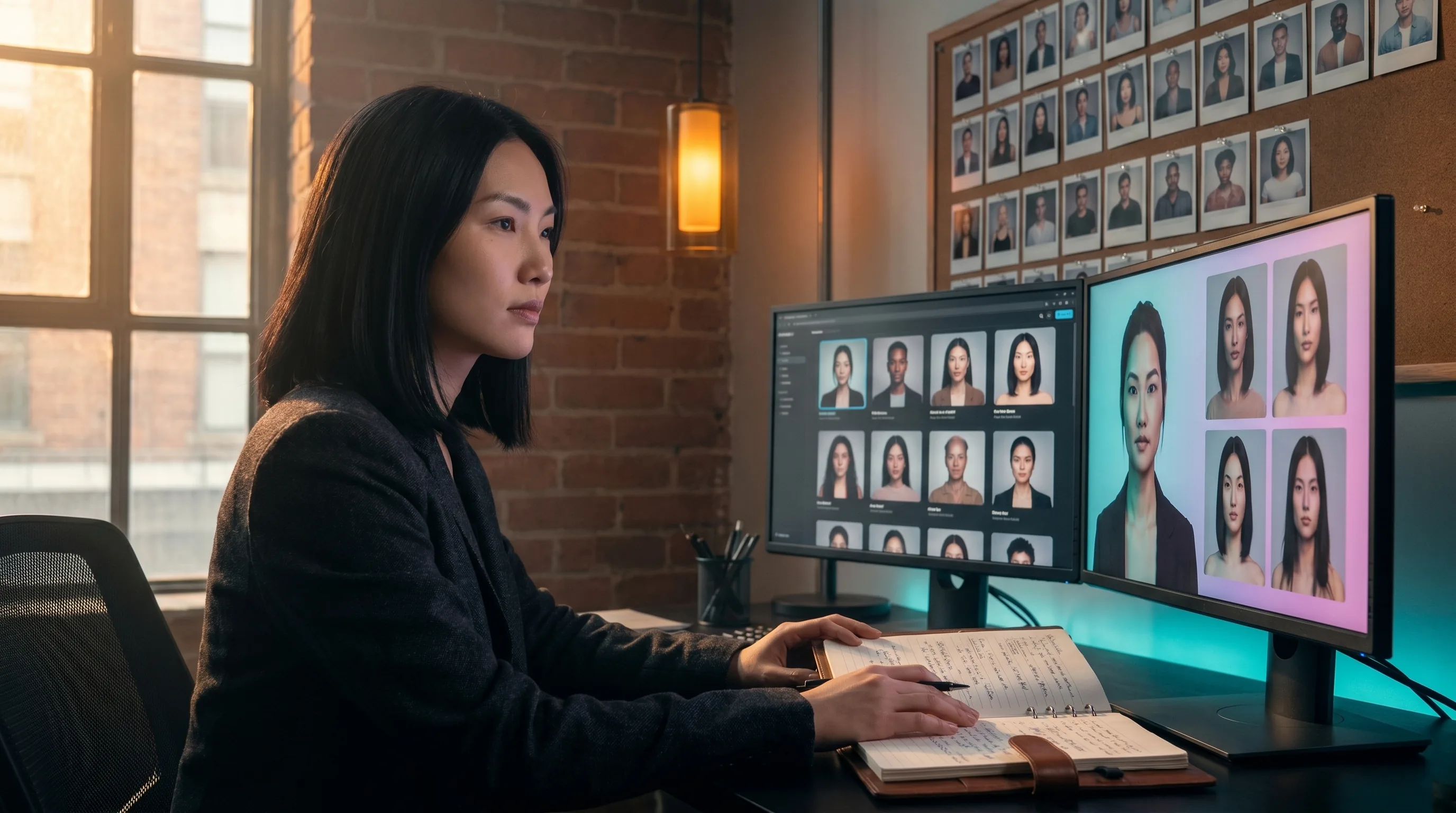
Every Playcut actor is a persistent runtime profile. Appearance, voice, wardrobe, and brand-kit context are bound to one actor ID. That ID powers actor-shoot (stills), actor-act (motion video), UGC ad variants, and on-product compositing where the actor holds, wears, or uses your real SKU.
Train once on a 30-to-60-second consented reference clip. Re-cast across formats without re-training. The 8-shot holdout test pulls one actor through still, motion, UGC, and product comp — the Actor Engine scored 9.5 out of 10 on that benchmark, the only vendor above 7.5 across all four formats.
The multi-model router, in plain terms
Playcut is not a single-model wrapper. The studio is a router. Type a prompt, and the router picks the best generation backend for the job: Veo 3.1 for cinematic motion, Imagen 4 and Gemini for stills, Grok for surreal concepts, fal.ai providers for specialty workflows.
You pay one subscription. You move credits around five-plus backends. HeyGen is a single-purpose avatar engine — exceptional at what it does, narrow by design. If your output mix is broader than talking-head video, the multi-model studio is the structural pick.
What a typical week looks like on Playcut
A DTC brand on Pro $29 might cast one founder-spokesperson actor, generate ten category-page hero stills in Imagen 4, shoot three on-product comps with the actor holding the new SKU, then render a 9:16 UGC cut for TikTok and a 16:9 cut for YouTube Shorts — all from the same actor ID.
An agency on Studio $79 runs four seats across three brand kits, with 25 actors split across the client roster and 6,000 credits a month covering the production load. Multi-brand brand kits switch the actor's wardrobe, voice register, and brand palette per client.
Migration checklist if you are switching from HeyGen
Do not cancel HeyGen on day one. Keep it paid while legacy talking-head explainers stay in production, then sunset the seat after the next renewal. Avatar and Digital Twin training does not transfer between platforms — each tool trains its own identity model.
What does transfer: your scripts, your brand brief, your reference photos (with documented consent), and any voice-cloning source audio you hold rights to. Plan a fresh 30-to-60-second consented reference clip for each actor you want to bring across. Start with your highest-frequency talking-head spokesperson, then layer in formats HeyGen never covered — stills, on-product comp, UGC.
Honest limits — where Playcut is not the right tool
If your output ships exclusively as SCORM packages into a corporate LMS, look at Synthesia first — they ship native SCORM 1.2 and 2004 on Enterprise. If your procurement requires ISO/IEC 42001 attestation today, Synthesia leads on that filing as well. Playcut is in progress on SOC 2 and ISO 42001 for late 2026.
If you need 175+ language coverage with native lip-sync for an enterprise localization program, HeyGen still wins that count. Playcut covers the top 30 ad-spend markets and tunes for cross-format identity hold inside each. Different optimizations, different buyer fits.